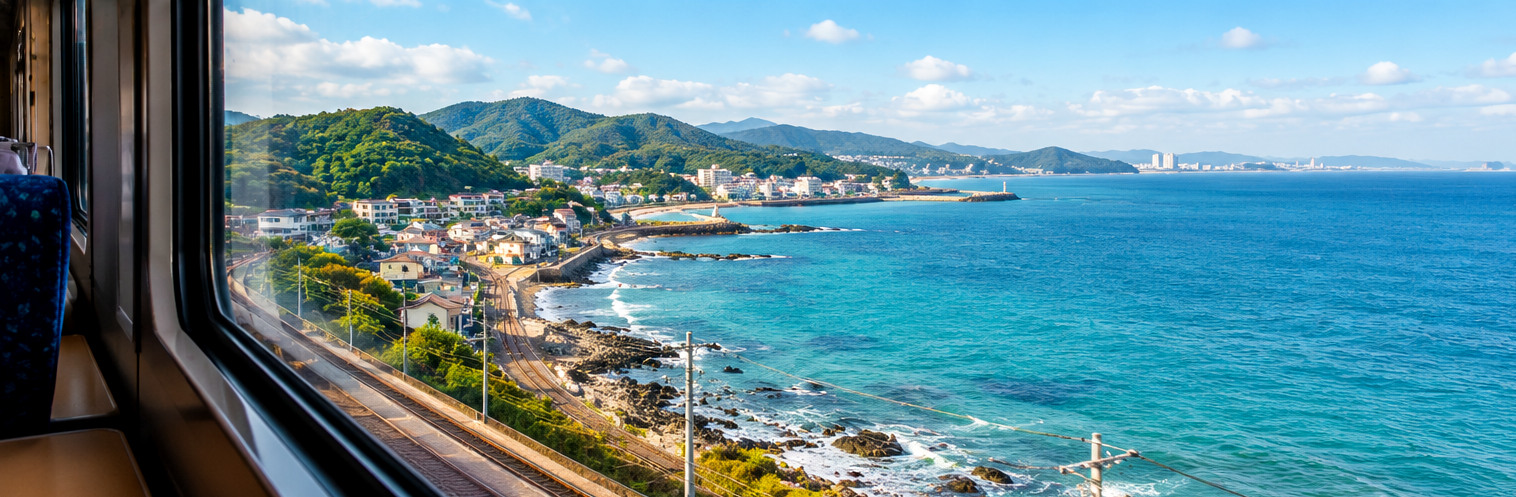
Images accompanying this article are AI-generated editorial visuals, not documentary photographs.
Best Things to Do in Busan: Beaches, Markets, Temples and Neighborhoods
Busan is not merely a beach add-on to Seoul. It is a diverse coastal city, and enjoying it means grouping destinations by region and leaving time to experience the sea.
AI-generated editorial visual. Conceptual scene—not documentary photography of an actual visit or a verified location.
Busan is a coastline, not a compact collection of attractions
Busan often surprises travelers who arrive expecting a smaller version of Seoul. It has its own rhythm: hills, busy neighborhoods, long coastlines, working port areas and very different pockets of city life. Attractions that look close on a small map can sit on opposite sides of a bay or require a long ride around a headland. The most important planning decision is to group places geographically rather than chasing every famous location in a single day. One coastal day and one older-city day usually work better than an itinerary that crosses Busan repeatedly.
For a first visit, choose your base according to the experience you value. Haeundae can suit a beach-oriented stay, Gwangalli draws visitors seeking an illuminated bridge view and lively waterfront, while areas nearer the main rail station or Nampo can be useful for certain transport and market-focused plans. None is automatically best. Check your hotel-to-attraction route with a mapping app and be realistic about hills, stairways and the size of station exits.
The Korea Tourism Organization highlights the coast as an essential part of Busan, particularly Haeundae, Gwangalli and seaside sites such as Haedong Yonggungsa Temple. Its suggested routes are a useful starting point, but verify each attraction’s operations and transport details directly. Weather, local events and construction can change the day.
Haeundae and the eastern coast: choose a relaxed route
Haeundae is among Busan’s best-known beaches, but its value is more than sand. The broader area offers a coastal walking atmosphere, places to eat, views toward the water and connections to other east-side attractions. You do not need to make swimming part of the day to enjoy it. Even outside the peak beach season, a waterfront walk can be rewarding. Always follow current swimming and weather safety notices rather than assuming beach facilities operate the same way year-round.
The eastern coastline also includes scenic attractions around Haedong Yonggungsa Temple and Haeundae Blueline Park. If you are considering a tourist train or other bookable experience, check the operator’s official site for times, accessibility and ticketing. A popular coastal route can have queues; weather can affect visibility and schedules. Leave enough time to enjoy an unhurried meal instead of filling the day with fixed-time reservations you may struggle to reach.
Visitors using public transport should look carefully at the final stretch to a coastal site. A station name may not mean the entrance is nearby. In a city of hills and curving roads, the last kilometer can be more demanding than it appears. Use the pedestrian directions and ask whether stairs or steep slopes are involved if those details matter.
Gwangalli after dark and the pleasure of an unhurried waterfront
Gwangalli offers a different kind of coastal experience from Haeundae, with a broad view toward Gwangandaegyo Bridge and many places to linger along the beach area. The atmosphere changes as daylight fades and the bridge lights become more prominent. You can enjoy the waterfront without booking a particular restaurant or viewpoint. A relaxed dinner nearby followed by a walk is a satisfying plan on its own.
The Korea Tourism Organization’s coastal recommendations include a number of sites between Haeundae and Gwangalli, but you do not need to visit all of them. Pick one daytime stop, one sunset stop and one evening area. Overpacking your afternoon makes it more likely that you will reach the coast too tired to enjoy it. Travelers with limited mobility should check the accessible routes and whether their chosen accommodation can be reached without a steep final walk.
If photography is important, treat weather and visibility as variable rather than guaranteed. Haze, rain or wind may change the view. Have an indoor alternative or simply enjoy a meal in the area. It is still a meaningful Busan experience even if the sky refuses to cooperate.
Nampo, Jagalchi and Gamcheon: a different side of the city
The older commercial districts closer to Busan’s port offer markets, street-level food culture and a different perspective from the beach neighborhoods. Jagalchi is associated with seafood and market activity, while the wider Nampo area offers shopping streets and urban bustle. Go with a flexible appetite rather than a rigid expectation that a particular vendor will have a specific menu. Prices, opening patterns and individual stall operations can vary, so ask before ordering or paying.
Gamcheon Culture Village is visually famous for its hillside houses and narrow lanes, but it is also a residential community. The official tourism authority has published visiting guidance, including restrictions affecting residential sections at certain times. Respect those rules, avoid photographing into homes and keep voices low. A place cannot remain enjoyable for residents if every visitor treats it as a private photo set. The slopes can be difficult for people who use mobility aids, so check practical access beforehand.
Do not try to combine the entire Nampo area, Gamcheon and multiple far-eastern beaches on a tight afternoon. The transfer time eats into the part of the day you wanted to enjoy. If you have just one Busan day, decide whether you want port-city history or the coast more, then make that choice deliberately.
A two-day plan and the mistakes worth avoiding
On a two-day visit, make day one your Haeundae-and-Gwangalli day, and day two your Nampo-and-Gamcheon day. Reverse them according to your hotel location and weather. If you arrive from Seoul partway through the day, a simple beach evening is usually enough. You can add a museum or market when it fits naturally, but an itinerary should give you options rather than fill every hour. Families with children may want one main activity and an extended break each afternoon.
Check the correct Busan arrival station and your onward hotel route before boarding any intercity service. Reserve train tickets using the official booking channel or an established operator. Make sure the station and destination labels in your itinerary match the ones used by your maps application. A similar-sounding neighborhood and a farther railway station are easy to confuse when you are tired.
Finally, be considerate on busy transport and near residential areas. Keep essential details offline, carry a payment backup, and do not rely on an old blog for service frequencies, tour prices or attraction hours. Busan is a city best approached with curiosity, appropriate walking shoes and enough time to sit beside the sea.
Quick answers for planning your trip
Is Busan worth visiting for one day? It can be, but a single day works best when you choose a clear priority. Trying to visit a beach, a temple, a hillside village and a market in one sweep may leave you with more transit than enjoyment. Choose the coast or the older port-city districts and give that part of Busan real attention.
Where should I sleep? Haeundae can work for a beach-focused break, Gwangalli for waterfront evenings, and areas nearer central transport links for certain short stays. Look at your actual train arrival point and the local travel routes you expect to use. A hotel with a beautiful sea photo may be inconvenient for someone planning multiple visits to the city’s western districts.
Do I need a tour for Gamcheon? Not necessarily, but check current visitor guidance and choose an appropriate respectful route. The area includes residential streets, and restrictions may change. A guide can add context; independent travelers should read the official visitor information and avoid entering quiet private lanes for photographs.
What if it rains? Switch your focus to museums, covered retail spaces or leisurely food experiences in a convenient district. Do not insist on an exposed coastal viewpoint during hazardous weather. The sea will still be there if conditions improve.
Official sources and fact-checking references (accessed 2026-10-15):
- https://english.visitkorea.or.kr/svc/contents/contentsView.do?vcontsId=222586
- https://english.visitkorea.or.kr/svc/contents/contentsView.do?vcontsId=1592902
- https://english.visitkorea.or.kr/public/contents/travel/KoreaTransportationGuide_enu.pdf
Schedules, prices, entry rules, transport, operating hours and weather conditions can change. Check official operator or destination information before travel.