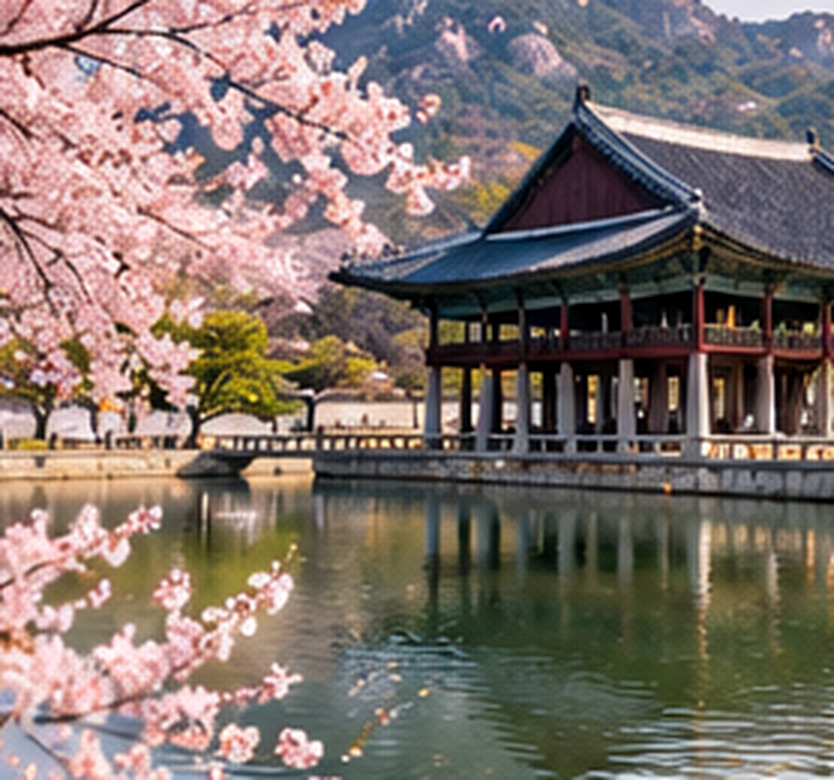
Images accompanying this article are AI-generated editorial visuals, not documentary photographs.
Cherry Blossom Season in Korea: When to Go and How to Plan
A cherry blossom trip can be beautiful, but nature does not promise a fixed peak date. Here is how to plan a flexible spring itinerary that still works if the flowers arrive early or late.
AI-generated editorial visual. Conceptual scene—not documentary photography of an actual visit or a verified location.
Why cherry blossom travel needs a flexible plan
Cherry blossom season is one of Korea’s most photographed travel periods, which is exactly why planning it can be frustrating. Online photographs make the bloom look predictable; real trees respond to changing weather. A particular street may look spectacular one week and ordinary the next. The right starting point is not a single promised peak date. It is a flexible date range, a region you would enjoy even without flowers, and several ways to adapt when the season arrives early or late.
Across South Korea, flowering conditions vary with location, temperature and year. Southern areas and some coastal places can follow a different rhythm from Seoul and higher-elevation districts. The Korea Tourism Organization has published spring travel guidance describing late March and early April as an important period for blossoms in many locations, but no annual forecast can guarantee what you will see on a booked day. Check the latest Korea Meteorological Administration information and local tourism notices in the weeks leading up to the trip.
There is a simple way to avoid disappointment: choose a city you want to visit regardless of flowers. Palaces, neighborhoods, museums, parks, food and cultural sites remain enjoyable when petals have fallen or buds are late. Treat blossoms as a potential highlight rather than the only reason the journey has value.
Seoul blossom walks and a realistic sightseeing day
Seoul offers multiple ways to experience spring, from large public parks to quieter street-level walks. The most useful blossom route is one that fits where you are already going. If your day’s main attraction is a palace or museum in the central city, look for nearby spring walks rather than spending hours traveling to a distant photo location. A riverside park can also provide open space and a pleasant change from dense streets, although exact flowering conditions vary from year to year.
Early mornings may be quieter at popular viewpoints, but do not assume every park or event area can be accessed around the clock. Some facilities impose event controls, pedestrian diversions or opening restrictions. Follow published signs and local management instructions. When a location becomes crowded, a less celebrated nearby street can offer a better experience than a tightly packed photo spot.
If the day is cool, layer clothing so you can stop outside without becoming uncomfortable. Korean spring is not uniformly warm, and morning and evening conditions may be chilly. The tourism authority’s climate guide recommends outerwear during parts of the season; checking the local forecast is more reliable than packing according to a beautifully sunny Instagram photograph.
Other regions, festival expectations and the question of timing
Travelers sometimes build an entire itinerary around a southern festival or a famous blossom-lined road. That can be worthwhile, but it adds variables: intercity transport, lodging availability and the chance that bloom conditions differ from the event’s fixed dates. Festivals may continue even when trees are not at their absolute peak. Book for the broader experience—food, local neighborhoods, performances or a new region—rather than expecting a particular tree to be at one precise stage.
If you are deciding between Seoul, Busan and another area, first consider the rest of your trip. Busan may give you a coastal atmosphere and city attractions even if the bloom is past its peak. Seoul offers dense neighborhoods and many indoor backups. A smaller town might offer a more relaxed walk but be harder to reach without a car or a coordinated bus schedule. Neither choice is inherently superior; practical logistics should be part of the decision.
Use official regional tourism updates in addition to national summaries. Travel blogs often preserve photographs from exceptionally good years, and a forecast graphic may become outdated quickly. When your trip approaches, compare several current notices and be ready to swap the order of your days instead of booking irreversible transport purely for an uncertain prediction.
How to photograph blossoms without ruining the experience
The easiest improvements to spring photography are often about timing and patience rather than camera gear. Softer morning or late-day light can help, while an overcast sky may create gentler colors than harsh midday sun. Look for a balance between branches and the surroundings: a path, roofline or riverbank can tell more of the story than a tight picture of petals alone. If you photograph people, respect their personal space and ask when appropriate. Crowded places are not ideal for large tripods or blocking pathways.
Do not climb trees, pull branches toward the camera or step into planted areas. A striking photograph is not worth damaging the landscape others came to enjoy. Public parks, residential streets and historic sites may have specific restrictions; obey them. Drone rules can also be strict, so do not fly one based on what somebody did in an old video. Check relevant legal and site restrictions first.
You can create a memorable blossom day without recreating a viral composition. A warm drink after a cool morning walk, an unexpected garden or a quiet side street may stay with you longer than competing for the same famous frame. The season is brief, which is one reason it deserves a considerate pace.
Practical booking advice and a backup itinerary
Spring is a popular season for visitors, so compare accommodations and transport early if your dates are fixed. Book flexible options when the price difference is reasonable, but do not pay large nonrefundable premiums on the assumption of a perfect bloom. Keep current weather and transport information available, and choose a backup indoor attraction for rainy or windy days. Rain can alter both your comfort and how long blossoms remain on the trees.
A practical three-day spring stay might combine a historic-center day, a neighborhood-and-cafe day and a flexible park or riverside day. Adjust which day gets the outdoor focus after checking the forecast. For longer trips, a regional excursion can add variety, but only if transfers and return times suit your party. Bring comfortable walking shoes, an outer layer and reasonable sun or rain protection. Plan for a meal away from the busiest park so you are not dependent on queues during peak crowds.
Above all, remember that a successful spring trip is not measured by whether every tree is covered in flowers. If you discover a city you enjoy, eat well and spend time outside when the weather allows, the trip can still feel special. Cherry blossoms are a beautiful possibility, not a guarantee that anyone selling a flight or tour can honestly make.
Quick answers for planning your trip
Can I predict peak bloom before booking flights? Not reliably for an exact street on an exact date months in advance. Seasonal patterns provide a starting window, but temperatures and rain can shift flowering. If blossoms are the main attraction, flexible dates and a choice of nearby viewing options reduce disappointment. Never treat a preliminary prediction as a guarantee.
Is Seoul the only place to see spring flowers? No. Other regions have appealing parks, streets and seasonal landscapes. The practical question is whether you want a longer regional journey and how much it adds to your broader itinerary. A less-famous walk near a city you already want to visit may be more enjoyable than traveling far for a crowded headline location.
What if rain ruins my planned blossom day? Move your outdoor walk to the clearer part of the forecast if possible, and use the rainy period for a museum, gallery or covered shopping street. Bring rain protection but avoid severe-weather travel. A safe flexible plan is more valuable than an attempt to preserve the exact order of a printed itinerary.
Is a guided blossom tour necessary? Usually not for ordinary urban viewing, though some visitors appreciate transport help for regional destinations. Check what the tour actually includes and whether changes are possible when bloom conditions are poor. No legitimate operator can guarantee nature’s timing. Choose experiences you would enjoy even if the trees are not at their peak.
Official sources and fact-checking references (accessed 2026-10-15):
- https://english.visitkorea.or.kr/svc/contents/contentsView.do?menuSn=929&vcontsId=1588802
- https://english.visitkorea.or.kr/svc/contents/infoBscView.do?vcontsId=140636
- https://english.visitkorea.or.kr/svc/contents/infoHtmlView.do?menuSn=219&vcontsId=194514
Schedules, prices, entry rules, transport, operating hours and weather conditions can change. Check official operator or destination information before travel.