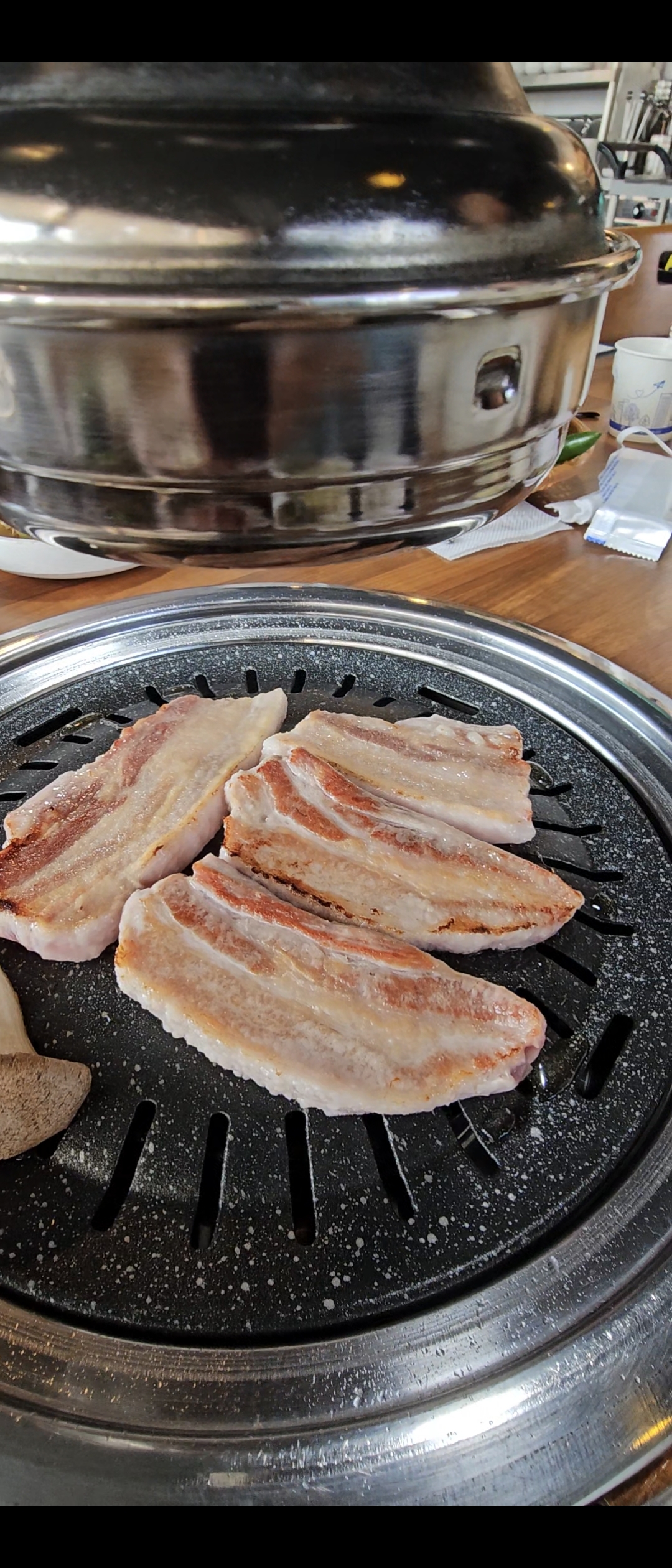
Korean BBQ is a meal where the table itself is the kitchen. A grill in the middle, raw meat, a half-dozen little dishes you didn’t order, and an unspoken rhythm that locals just do. First time in, it can feel like everyone else got a memo you missed. This is that memo — without the K-drama soundtrack, just what to order, how it works, and what it costs.
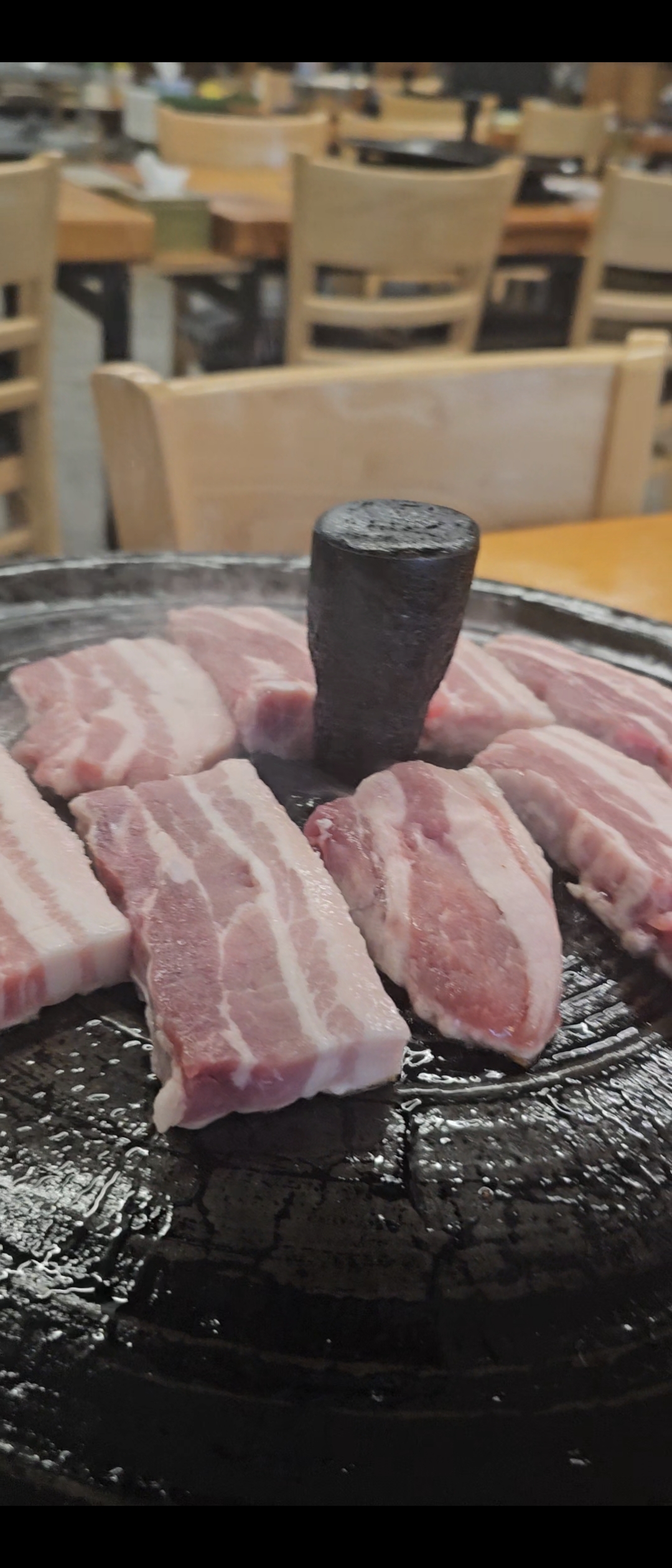
Short answer: First time? Order samgyeopsal (pork belly). It’s forgiving, doesn’t need marinating, and almost every BBQ shop sells it. Expect a 2-portion minimum per person, no ID required for soju, and a full meal with drinks in the 35,000–50,000 won per person range at a normal neighbourhood place. Skip the flashy Myeongdong tourist grills; walk one street back.
Prefer to watch? Here’s the 10-second version:
What “Korean BBQ” actually is
In Korean it’s just gogi-jip (고기집, “meat house”). You sit at a table with a built-in grill — either a gas burner, a hot stone, or a charcoal pit dropped into the middle — and you cook raw meat in front of you while drinking and picking at side dishes. There’s no single dish called “Korean BBQ”; it’s the whole format. The default protein is pork, which is cheaper and what locals actually eat on a Tuesday night. Beef (소고기, sogogi) is the special-occasion version and costs roughly twice as much.
The cuts — and what to order first
Don’t overthink this. Most pork BBQ menus revolve around four or five cuts:
| Cut | Korean | What it is | Good for |
|---|---|---|---|
| Pork belly | 삼겹살 (samgyeopsal) | Layered fat and meat, thick slice, not marinated | First-timers — start here |
| Pork shoulder/neck | 목살 (moksal) | Leaner than belly, still juicy, slight chew | Anyone who finds belly too fatty |
| Pork jowl | 항정살 (hangjeongsal) | Marbled, almost beef-like texture, pricier | A second round once you know what you like |
| Marinated ribs | 돼지갈비 (dwaeji-galbi) | Sweet-soy marinated, tender | If you want flavour without thinking |
| Brisket-cut beef | 차돌박이 (chadolbaegi) | Paper-thin beef, cooks in 5 seconds | A small “treat” order alongside pork |
The honest rule: samgyeopsal is to Korean BBQ what cheese pizza is to pizza — the default everyone knows. If you order one thing your first time, order that. Add a second cut (moksal or hangjeongsal) if you’re hungry.
How portions work — the 2인분 thing
Meat is sold by the inbun (인분, “serving”), and almost every BBQ shop has a 2-portion minimum. One portion of samgyeopsal is typically 150 grams, priced roughly 12,000–20,000 won per portion. So a couple ordering “samgyeopsal 2인분” is the baseline transaction.
The minimum exists because the side dishes are unlimited and the grill setup has a fixed cost. For solo travellers, this is the one piece of friction you can hit. Your options:
- Order 2 portions anyway. It’s not as much as it sounds — most people finish 1.5. “포장해 주세요” (pojang-hae juseyo, “to-go please”) gets you a box for what’s left.
- Look for a 1인 BBQ (혼술/혼밥 specialised) shop. They have single-seat grills and no minimum. They’re common in Hongdae, Sinchon, and student-heavy areas.
- Order bibimbap or a stew (찌개, jjigae) on the BBQ menu instead — those have no portion minimum.
Who grills, and when to flip
This depends on the restaurant. At mid-range and upscale places, the staff brings tongs and scissors to your table, sears and flips the meat, and snips it into bite-sized pieces for you. At most neighbourhood joints, it’s on you. The good news: it’s harder to mess up samgyeopsal than you think.
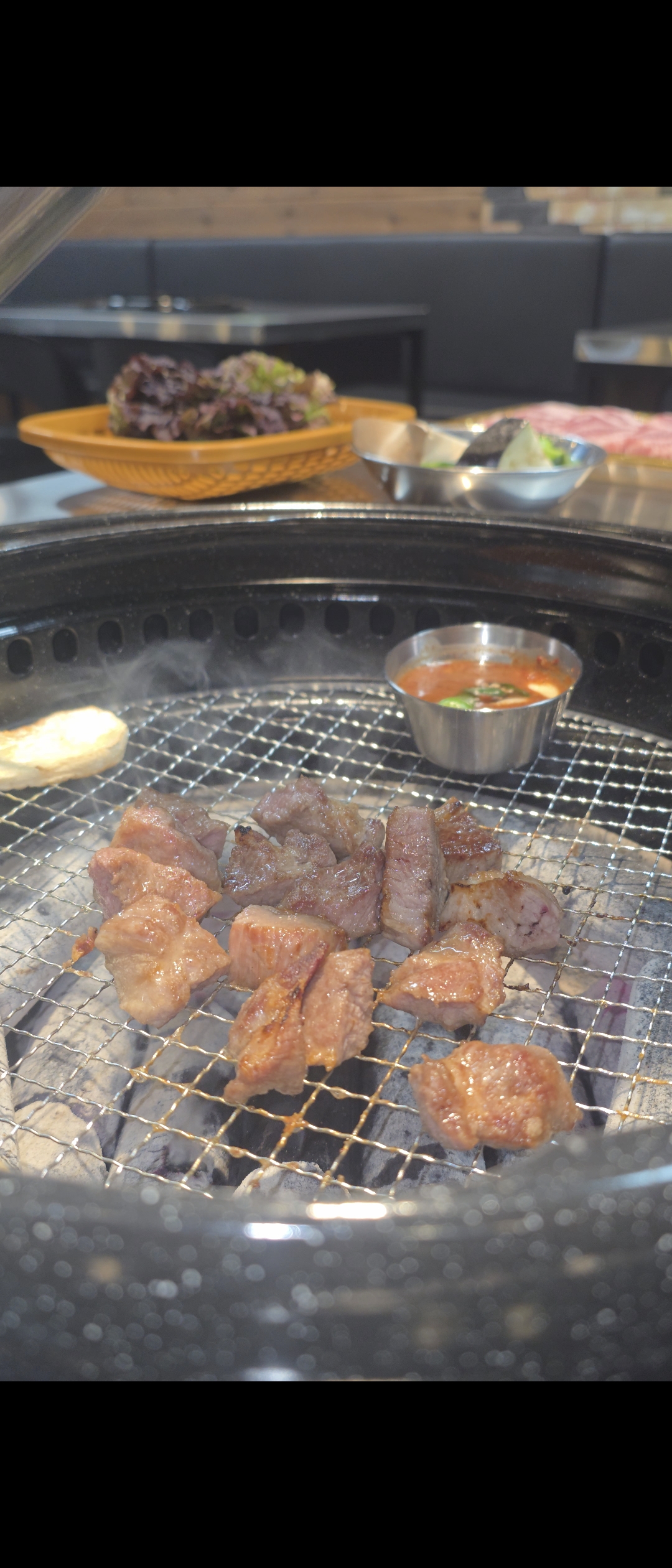
The basic moves:
- Wait for the grill to be hot — the meat should sizzle the moment it lands. If it just sits there, the grill isn’t ready.
- Lay slices flat, don’t crowd. Half the grill is fine; the other half is for the garlic, kimchi, and onion that come on the side and grill alongside.
- Flip when the underside is golden brown — usually 2–3 minutes for thick belly. Cooking on the second side takes less.
- When mostly cooked, use the kitchen scissors at your table to cut each slice into smaller pieces. Yes, scissors. This is normal. They come out clean.
- Don’t move pieces until they have colour. Constant flipping just steams them.
If kimchi is on the grill, it crisps up. Eat it that way — it’s one of the best parts.
Banchan, ssam, sauces — the actual meal
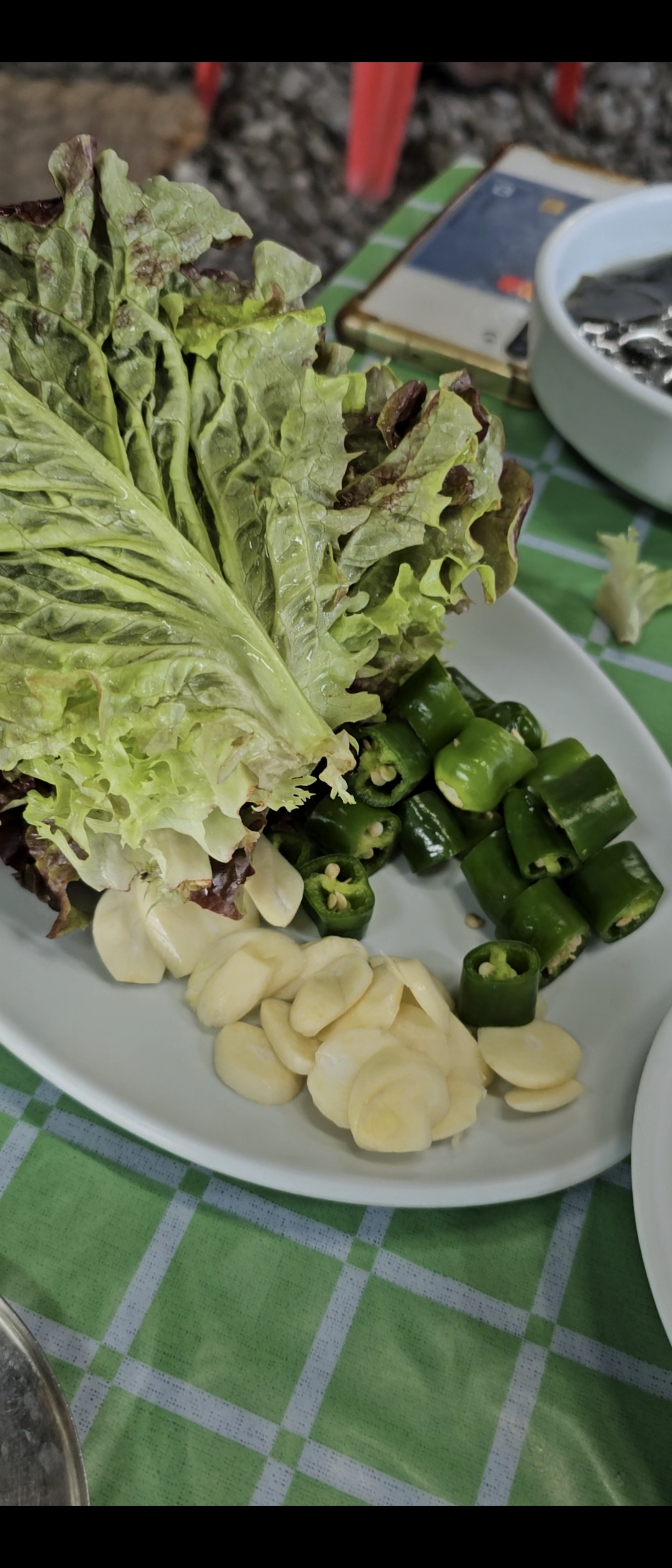
The little dishes that arrive before you order meat are banchan (반찬, side dishes). There will be 4–8 of them depending on the shop — typically kimchi, pickled radish, bean sprouts, marinated onions, lettuce leaves, sliced raw garlic, and green chillies. They are free and refillable. Just hand the empty dish to staff and they refill it — no extra charge, no awkward moment.
A ssam (쌈, “wrap”) is the standard way to eat the meat:
- Pick up a lettuce or perilla leaf with your hand.
- Put a piece of grilled meat on it.
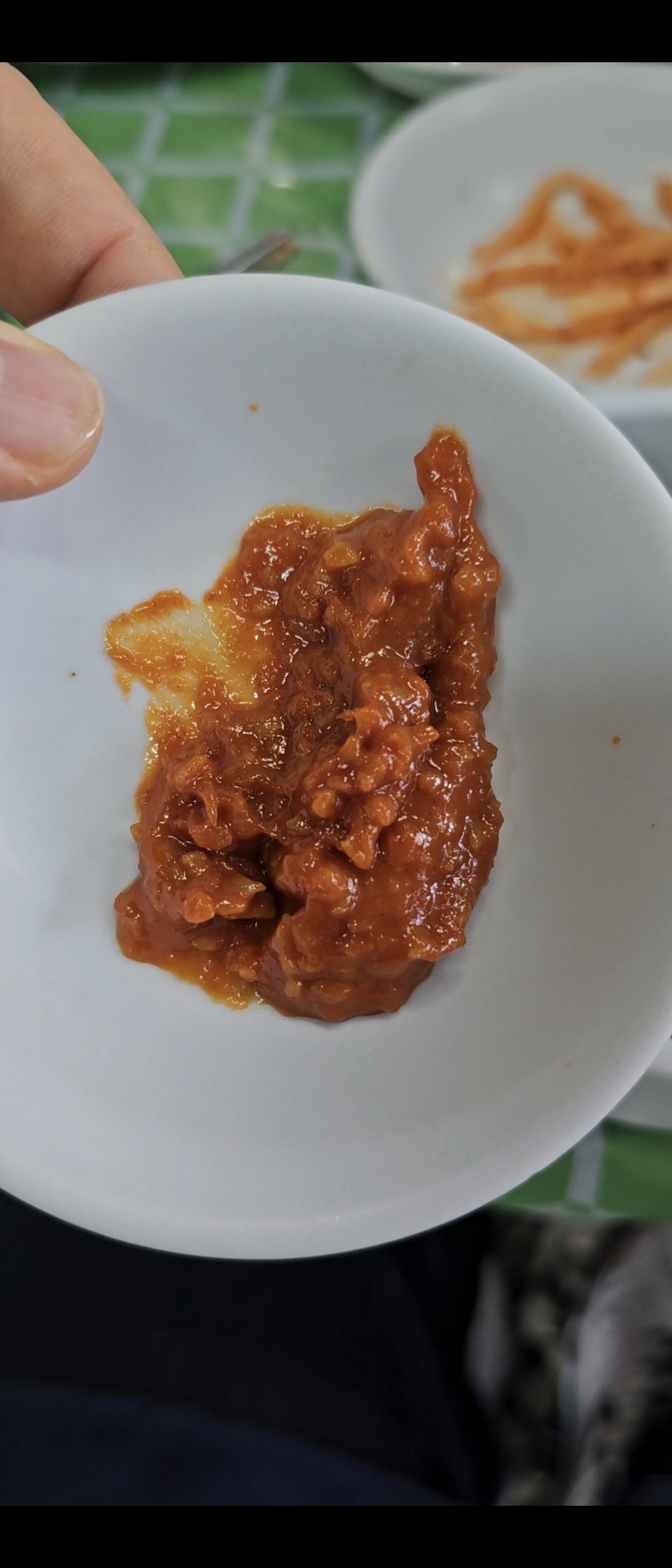
- Add a small dab of ssamjang (쌈장 — fermented bean paste with a chilli kick), a slice of grilled garlic, maybe a tiny bit of rice or kimchi.
- Wrap it into a small bundle and eat it in one bite.
That one-bite rule is real — half a wrap awkwardly hanging out of your mouth is the universal sign of a first-timer. Keep the fillings modest and the leaf small.
The other sauce you’ll see is gireumjang (기름장) — just sesame oil with salt and pepper. Dip the meat directly into it, no wrap needed. It’s understated and brilliant with samgyeopsal. Many Koreans prefer it to ssamjang for fattier cuts.
Soju, beer, and somaek
Soju (소주) is the standard drink. A 360ml bottle costs 5,000–7,000 won at a neighbourhood restaurant; Gangnam can push to 8,000. It’s clear, slightly sweet, around 16–17% ABV — drinks easy and hits later than you think.
Beer (맥주, maekju) — Cass or Terra on draft, around 4,000–5,000 won a glass.
Somaek (소맥) is the local move: pour a shot of soju into a half-glass of beer. Lighter than straight soju, more flavour than straight beer, and the reason Tuesday dinners turn into Wednesday hangovers.
Pouring etiquette: pour for others, not yourself. When someone pours for you, hold your glass with two hands if they’re older or more senior. If you’re the youngest, expect to do most of the pouring.
What it actually costs
For a normal neighbourhood meat house in Seoul in 2026, budget roughly per person:
- No drinks: 20,000–35,000 won
- With a shared bottle of soju and a beer: 35,000–50,000 won
That covers 1.5–2 portions of meat, all the banchan, and a stew or rice at the end. Beef or a premium cut roughly doubles it. Premium hanwoo (한우, Korean wagyu-grade beef) restaurants run 80,000–150,000+ won per person.
Where to go
The honest landscape:
- Neighbourhood streets — the best ratio of price to quality. Anywhere with full tables and Koreans eating is fine; look for places with charcoal-grill chimneys above the tables (it costs more but tastes noticeably better).
- Mapo, Euljiro 3-ga, Sinsa, Yeonnam-dong — districts with high density of locally loved BBQ joints. Walking around and picking the busy one is a reasonable algorithm.
- Major chains — Maple Tree House, Wangbijib, Palsaek Samgyeopsal, Honghyeon Galbi. Reliable, slightly pricier, English menus, comfortable for first time. No shame in it.
- Myeongdong main strip — skip. It’s an infamous tourist trap with flashy English signs and meaningfully higher prices for the same meat. The good places in the area are one or two streets back, away from the cosmetics crowd.
Etiquette in 30 seconds
- The grill is a shared task; nobody is the official cook.
- Don’t eat banchan straight off the shared plate — move some to your own.
- Refill banchan freely; staff expect it.
- Don’t blow your nose at the table.
- The bill is paid at the counter on the way out, not at the table. Whoever invited usually pays; younger people try to grab the bill as a polite gesture.
- Tipping is not a thing. Don’t.
After the BBQ
Two natural next steps. The first is a second round (이차, icha) — usually chimaek, which gets its own honest treatment in our Korean Fried Chicken & Chimaek guide. The second is walking it off and letting the soju settle. Both are correct.
For more on what’s worth eating in Seoul, see our Food guides.
Prices and minimums here were cross-checked against current 2026 sources at the time of writing, but Korean restaurant prices move quickly and individual shops set their own rules. Always check the menu before you sit down.