If you’ve spent any time around K-beauty, you’ve heard the phrase: glass skin. It’s the look on every Korean skincare ad and half of Instagram — a complexion so smooth, clear, and luminous it seems to reflect light like an actual pane of glass. But “glass skin” is one of those terms that gets used constantly and explained rarely. Here’s what it actually means, and why it’s less about a product and more about a principle.
What glass skin actually is
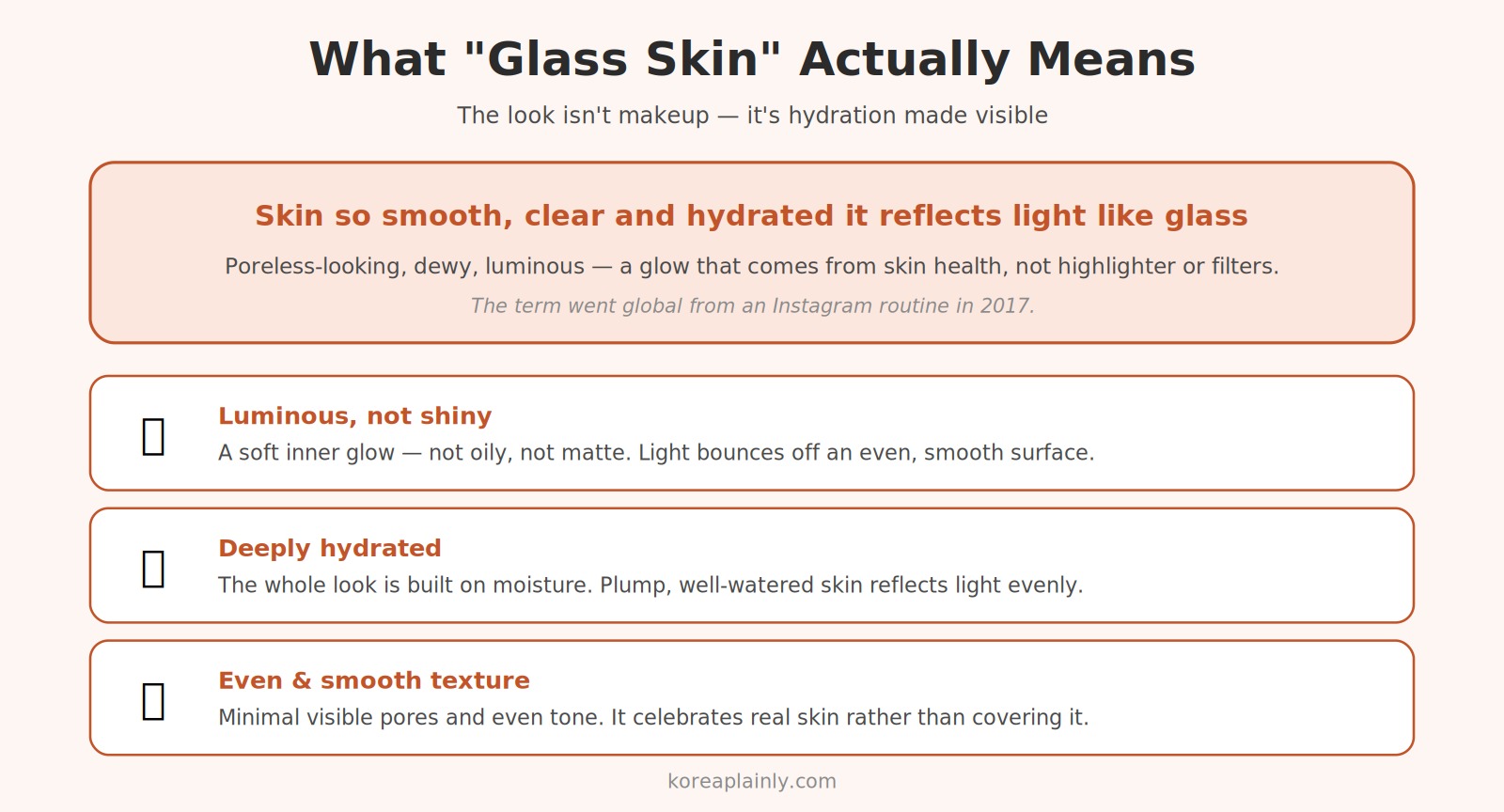
Glass skin (the term went global from a Korean-American makeup artist’s Instagram routine in 2017) describes skin that looks poreless, dewy, and lit from within. The key word is within — this isn’t the shine of highlighter or an oily T-zone, and it isn’t a filter. It’s what genuinely healthy, deeply hydrated skin looks like when light hits an even, smooth surface.
Three things define the look:
- Luminous, not shiny. A soft glow, not grease and not a flat matte finish. The distinction matters: oily skin reflects light unevenly and looks slick; glass skin reflects it evenly and looks radiant.
- Deeply hydrated. This is the foundation of the entire thing. Plump, well-watered skin cells create the smooth surface that bounces light back.
- Even and smooth in texture. Minimal visible pores, even tone. Crucially, glass skin celebrates real skin rather than covering it — the goal is your skin at its healthiest, not your skin hidden.
That last point is why the idea resonated worldwide. It reframed the goal from “conceal your skin” to “improve your skin,” which is the core philosophy of Korean skincare generally: skincare as a long-term investment in skin health, not a quick cosmetic fix.
The routine behind it
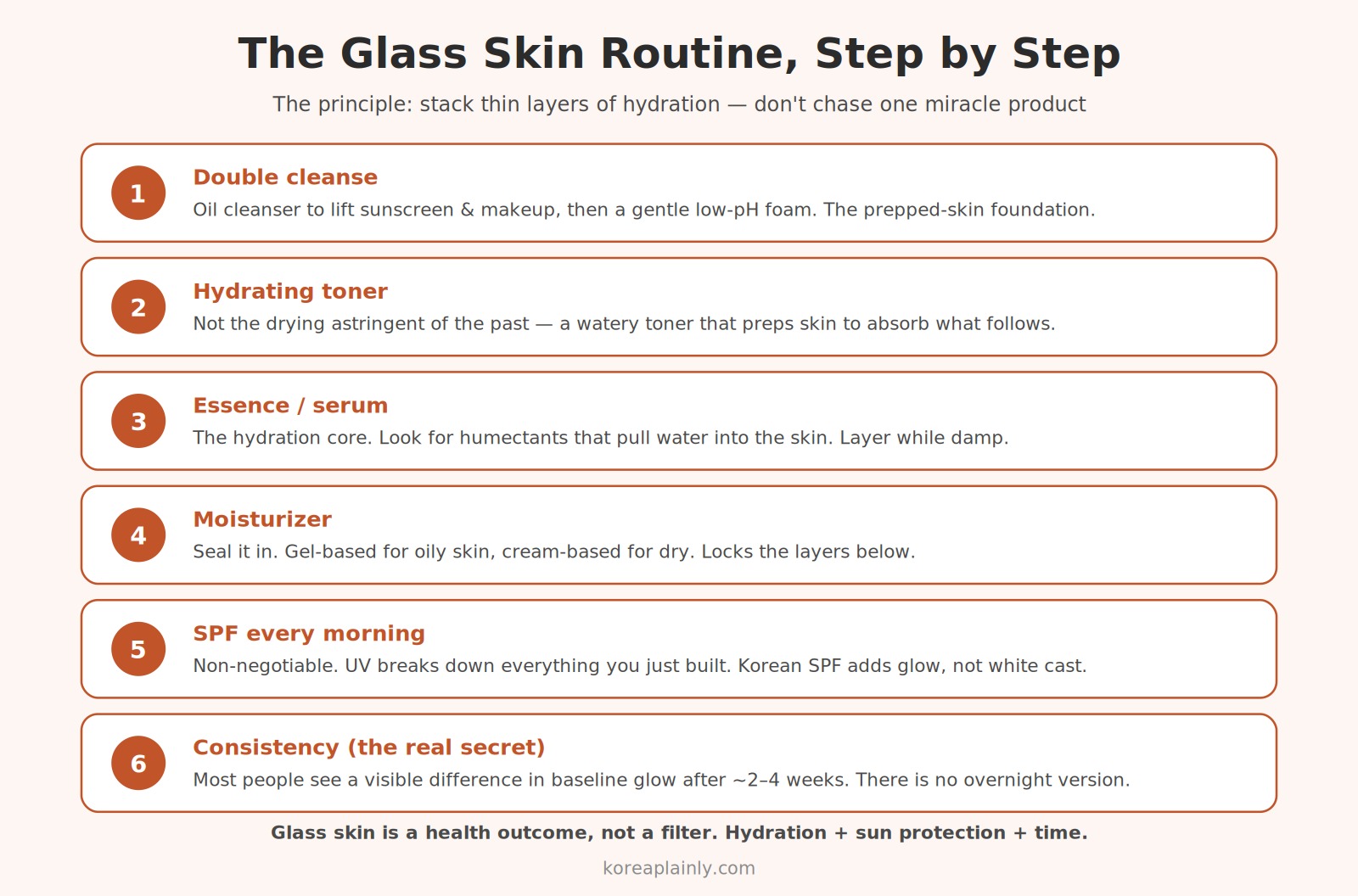
Here’s the part people get wrong: glass skin isn’t a product you buy, it’s a result you build. And the building principle is simple — stack thin layers of hydration, don’t chase one miracle cream. The famous Korean multi-step routine is really just that principle applied patiently:
- Double cleanse. An oil-based cleanser first to lift sunscreen and makeup, then a gentle low-pH foaming cleanser. This is the prepped-skin foundation everything else sits on.
- Hydrating toner. Not the harsh, drying astringent the word “toner” used to mean — a watery, hydrating toner that preps the skin to absorb what comes next.
- Essence or serum. The hydration core. Look for humectant ingredients that pull water into the skin, and apply while your face is still slightly damp so you’re sealing moisture in.
- Moisturizer. Locks in the layers below. Gel-based textures suit oily skin; richer cream textures suit dry skin.
- SPF every single morning. Non-negotiable. UV damage breaks down collagen and undoes everything you’re building — and many Korean sunscreens actually add to the dewy finish rather than mattifying it away.
The part nobody wants to hear
The real secret isn’t a step — it’s consistency. Most people see a visible difference in their baseline glow after about two to four weeks of doing the routine properly. There is no overnight version. Glass skin is a health outcome: hydration, plus sun protection, plus time.
That’s also the good news. Because it’s about skin health rather than a specific ₩50,000 product, the routine adapts to any skin type — lighter formulas for oily skin, richer ones for dry, gradual introduction for sensitive — and the core structure stays the same. Adjust for the season too: heavier moisture and a humidifier in dry winters, lighter layers and extra SPF in humid summers.
So the next time you see “glass skin” on a label, you’ll know it’s not promising you a filter in a bottle. It’s describing what happens when you hydrate consistently and protect your skin from the sun — the whole of K-beauty, compressed into two words.