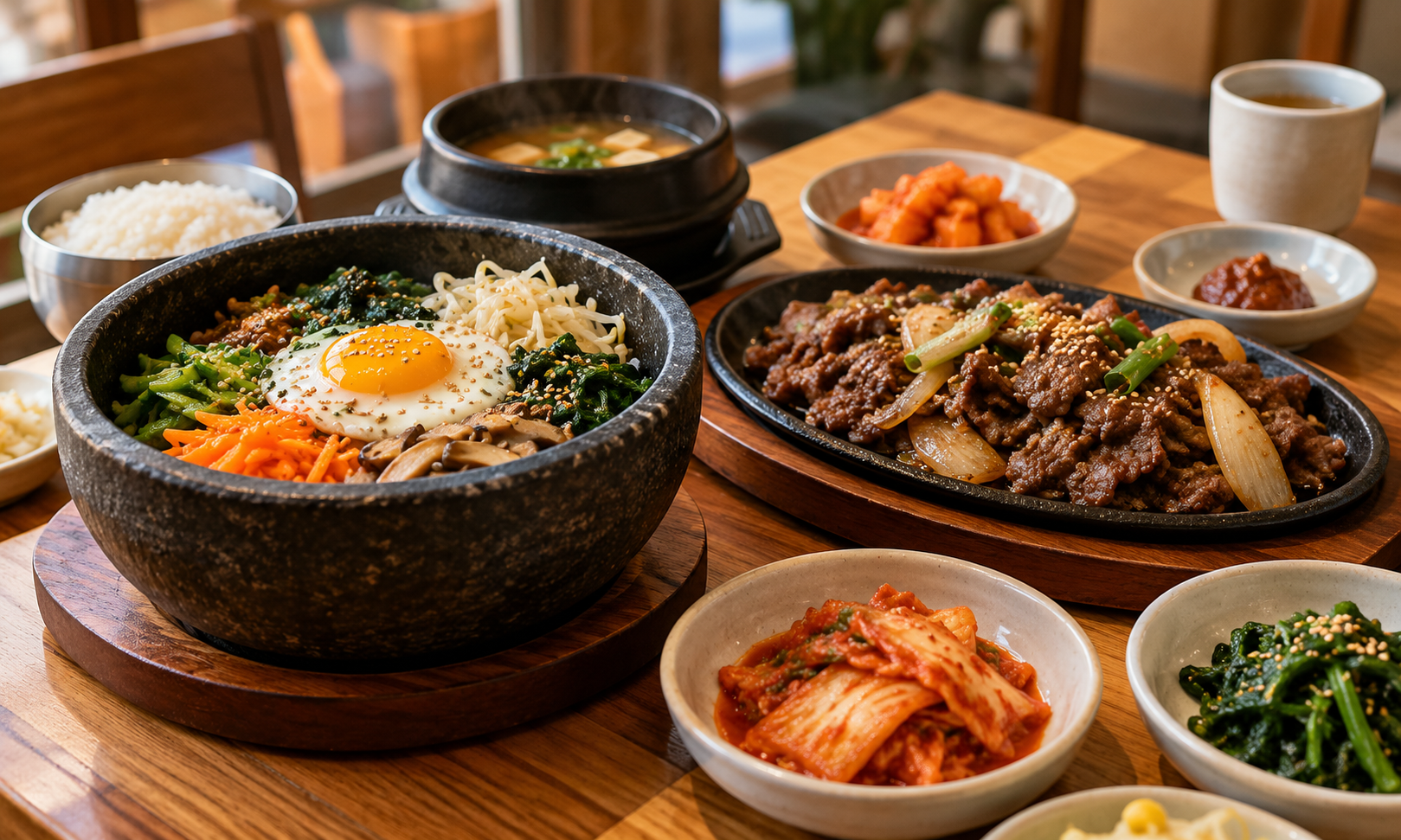
Images accompanying this article are AI-generated editorial visuals, not documentary photographs.
What to Eat in Korea for Beginners: A Practical First-Timer’s Guide
If you are visiting Korea for the first time, food can be one of the most exciting parts of the trip—and also one of the easiest places to feel overwhelmed. A single table can arrive with rice, soup, grilled meat, dipping sauce, and a half-dozen side dishes before you have even figured out where to put your chopsticks. Menus can be unfamiliar, spice levels can vary more than expected, and some of the most famous dishes are not always the easiest place to start.
The good news is that beginner-friendly Korean food is not hard to find. In fact, Korea is one of the better countries to learn a cuisine as you go because many meals are structured around a few clear building blocks: rice, soup, a main dish, and banchan, the small side dishes served alongside the meal. Once you understand that rhythm, you can order with much more confidence.
AI-generated editorial visual: a conceptual hero image showing a beginner-friendly Korean meal spread. It is an illustrative editorial image, not a real documentary travel photograph.
1. Start with the dishes most visitors find approachable
If you only have a few meals to get comfortable with Korean food, begin with dishes that are widely liked, easy to understand, and usually available in visitor-heavy neighborhoods as well as ordinary local districts.
Bibimbap is one of the easiest entry points. The Korea Tourism Organization describes it as a rice dish mixed with vegetables and often beef, and it is popular because it gives you several Korean flavors in one bowl without demanding that you know a lot about the menu first. If you are unsure about spice, you can add gochujang gradually rather than mixing in the whole amount at once.
Bulgogi is another classic beginner dish. It is thinly sliced marinated beef, usually sweet-savory rather than sharply spicy. For many first-time visitors, bulgogi is useful because it feels both recognizably grilled and distinctly Korean at the same time.
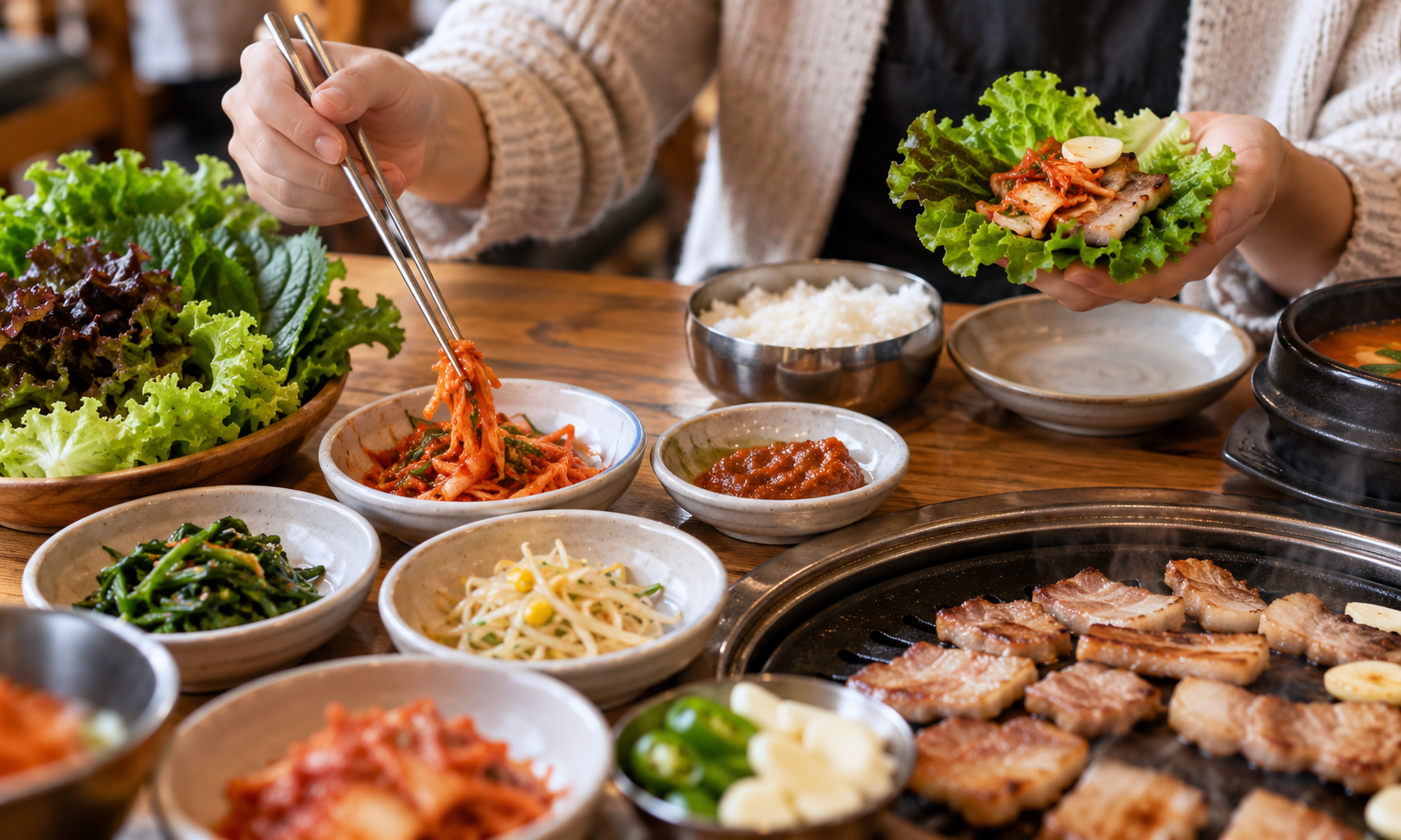
Samgyeopsal, or grilled pork belly, is a good next step if you want the social Korean barbecue experience. You cook or finish the meat at the table, then wrap it in lettuce with sauces or side dishes. It is interactive, forgiving, and easy to customize bite by bite.
Kimchi-jjigae and doenjang-jjigae are common stews that appear in many everyday restaurants. Kimchi-jjigae has a stronger fermented and spicy profile, while doenjang-jjigae has a deep savory taste built around fermented soybean paste. They are worth trying, but if you are very sensitive to spice or fermented flavors, they may be better as your second or third Korean meal rather than the first one.
Kalguksu and naengmyeon are good noodle options to know. Kalguksu is comforting and mild, while naengmyeon is cold and more distinctive. If the weather is hot, naengmyeon can be an excellent choice, but it surprises some first-time visitors because cold noodles are not what many expect from a meal.
2. Understand the structure of a Korean meal
One of the biggest beginner mistakes is thinking you need to identify every small dish on the table before you can eat correctly. You do not. Korean meals often make more sense when you see them as a flexible system rather than a test.
A typical meal may include:
- bap (rice)
- guk or jjigae (soup or stew)
- one main dish such as grilled meat, fish, or a mixed rice dish
- banchan (side dishes)
The Korea Tourism Organization explains that hansik, traditional Korean food, centers on rice served with soup and a range of side dishes. That basic pattern is helpful for travelers because it means you do not have to order a separate vegetable, starch, and sauce every time. Much of the meal structure is already built in.
When banchan arrives, think of it as part of the meal rather than as a sequence of separate appetizers. You can sample a little, return to the ones you like, and combine them with the main dish however you want. Some side dishes are cool and refreshing, others salty, fermented, crunchy, spicy, or lightly dressed. Their role is often to make each bite of rice or meat feel more balanced.
That is also why it is normal for a Korean table to look crowded. The table is not trying to guide you toward one central plate in the Western sense. It is offering a set of small combinations that you create as you eat.
3. A smart beginner order: what to choose by comfort level
If you want a low-stress plan rather than a long list of famous dishes, use this progression.
If you want the easiest first meal: order bibimbap or bulgogi. Both are widely available, recognizable, and generally approachable for visitors who are still learning how spicy or fermented they want their food to be.
If you want the classic group meal: choose samgyeopsal. It is ideal when you are dining with at least one other person, because Korean barbecue is usually more fun as a shared meal. You can start with plain grilled pork, add a little ssamjang, then try lettuce wraps with kimchi or garlic once you are comfortable.
If you want something warming but not too complicated: try kalguksu or a simple soup-and-rice set meal.
If you are curious about iconic Korean flavors: try kimchi in small amounts with rice, or order kimchi-jjigae when you feel ready for something bolder.
If you want snacks instead of a full meal: tteokbokki, kimbap, hotteok, and convenience-store snacks are easy ways to explore without committing to a large order. Tteokbokki can range from mildly sweet-spicy to genuinely hot, so it is worth asking or observing before assuming it is mild.
4. How to handle spice, fermentation, and side dishes without stress
Many visitors assume all Korean food is very spicy. That is not true. Korea has plenty of spicy dishes, but it also has many meals built around soy sauce, broth, grilled meat, or mild noodle soups.
The better question is not “Is Korean food spicy?” but “Which part of this meal carries the heat?” Sometimes the answer is the stew. Sometimes it is the kimchi. Sometimes the dish itself is mild and only the added sauce increases the heat.
For beginners, a good strategy is to manage intensity one layer at a time:
- Taste the dish in its plain form first.
- Add spicy sauce gradually rather than all at once.
- Use rice and soup to reset your palate.
- Try small amounts of kimchi instead of treating it as an all-or-nothing challenge.
Fermented flavors can also surprise first-time travelers more than chili does. Kimchi, doenjang, and other fermented seasonings are central to Korean food culture. You do not need to love them instantly. If a strong fermented note feels unfamiliar, pair it with rice or grilled meat and come back to it over a few meals. Many people enjoy it more once they understand how it functions alongside the rest of the table.
5. Korean dining customs that help, not intimidate
You do not need perfect table manners to eat well in Korea, but a few habits make the experience smoother.
First, wait a moment before lifting into the side dishes if you are dining with others, especially in a more traditional setting. Casual restaurants are relaxed, but watching the rhythm of the table is always useful.
Second, remember that shared dishes are normal. Banchan is meant to be shared. The main dish may be shared too, especially at Korean barbecue restaurants or places specializing in stews and set meals.
Third, do not worry if the staff seem brisk. Restaurants in Korea can be efficient rather than chatty, particularly at busy times. That usually reflects pace, not rudeness.
Fourth, learn a few practical menu signals. A dish listed for two people or more often really does need that minimum order. Barbecue places in particular may expect you to order by portion rather than by a single plated meal.
AI-generated editorial visual: a conceptual food-and-dining scene showing a Korean barbecue table and lettuce-wrap style eating. It is an editorial illustration for the article, not a real documentary photograph of a specific place.
6. Where beginners should eat first
For a first few meals in Korea, the best restaurants are not necessarily the most famous ones. They are the places where the menu is clear, the cooking style is straightforward, and you can focus on learning how the cuisine works.
Look for:
- neighborhood restaurants with short specialty menus
- bibimbap or bulgogi restaurants
- barbecue restaurants with clear set options
- noodle or soup shops with picture menus
- food courts in department stores or large malls
- well-organized markets or tourist-friendly districts where dish names are easier to identify
If you have dietary restrictions, do not assume every restaurant can adapt easily. Korea is improving in this area, but dedicated vegetarian, halal-friendly, or allergy-aware options still require some planning. The official Visit Korea site provides dedicated food guidance for special diets, and that is a better starting point than guessing from a random menu.
Final thoughts: aim for confidence, not completeness
A good first food trip in Korea is not about trying everything at once. It is about learning which flavors you enjoy, what meal structure suits you, and how to order with less hesitation each day. If you begin with approachable dishes like bibimbap, bulgogi, and samgyeopsal, pay attention to how rice, soup, and banchan work together, and treat spicy or fermented flavors as something to explore gradually, you will already understand more than many first-time visitors do.
The best way to approach Korean food is with curiosity and a little flexibility. You do not need to decode every side dish on day one. You only need one or two good meals to realize that Korean food is less mysterious than it first appears—and much more varied than the usual stereotypes suggest.
Sources
- Korea Tourism Organization, Food Story: Hansik — https://english1.visitkorea.or.kr/enu/FOD/FO_ENG_1_4.jsp (accessed 2026-10-14)
- Korea Tourism Organization, Ingredients of Korean Food / Seasonings — https://english1.visitkorea.or.kr/enu/FOD/FO_ENG_1_3.jsp (accessed 2026-10-14)
- Korea Tourism Organization, Traditional Korean Food — https://english1.visitkorea.or.kr/enu/AKR/AK_ENG_2_3.jsp (accessed 2026-10-14)
- Korea Tourism Organization, Kimchi — https://english1.visitkorea.or.kr/enu/FOD/FO_ENG_2_1.jsp (accessed 2026-10-14)
- VISITKOREA, K-Food Highlight — https://english.visitkorea.or.kr/svc/sp/food/ext/highlight_main.do (accessed 2026-10-14)