A Korean convenience store is not a place you go when everything else is shut. It is a place people go on purpose, at every hour, and the reason is that the food is designed to be combined rather than bought one item at a time.
The combinations below are not clever hacks. They are what Koreans actually order, standing at the counter, without thinking about it.
Why combining is the whole point
Korean convenience stores are unusually small and unusually dense. A branch might be twenty square metres and still carry four hundred items, because the assortment is built around a specific assumption: most customers are assembling a meal in under two minutes, not shopping for a week.
That shapes everything on the shelves. Portions are single-serving. Prices land in clean units. The hot water dispenser, the microwave, the ramyun cooker and the seating counter are all within two steps of each other. And crucially, most stores run 1+1 and 2+1 promotions on a rotating basis, which means the “right” combination on any given week is partly determined by what is currently on offer.
Koreans read those stickers before they read the products.
The combinations

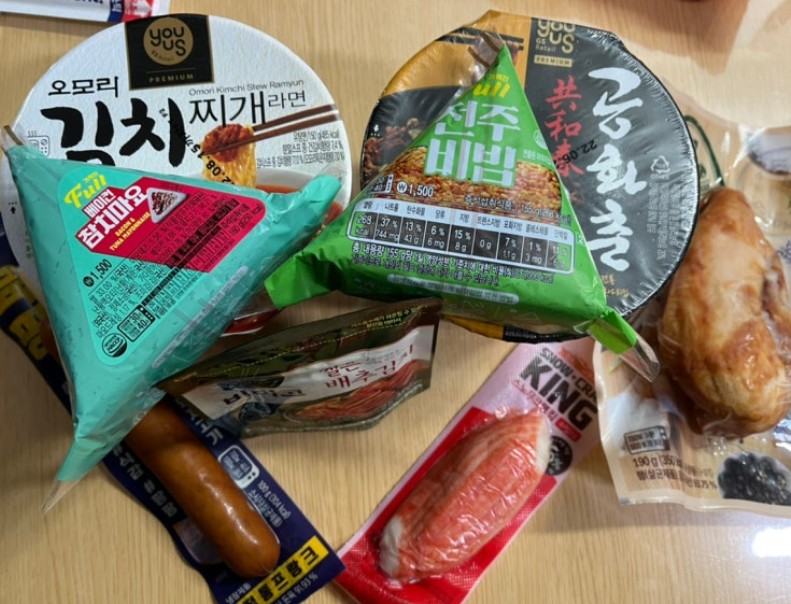
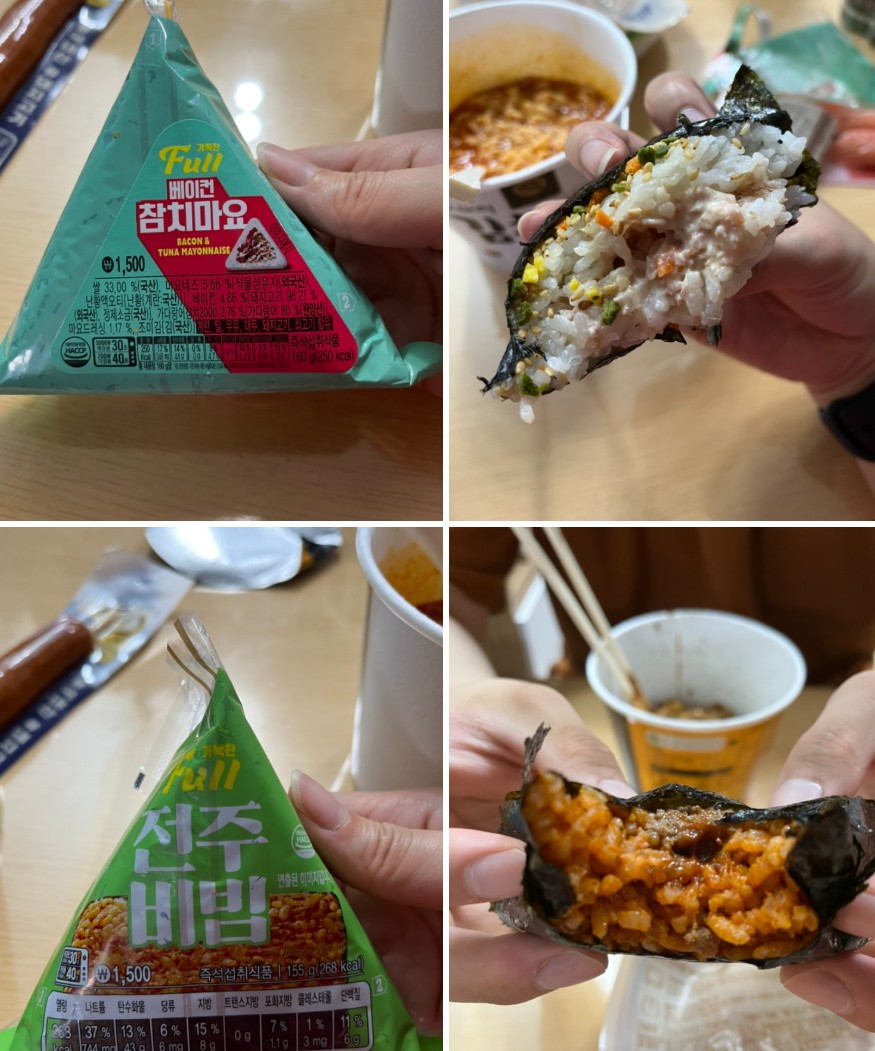
Samgak gimbap + cup ramyun. The default, and the one you will see most often. A triangular rice ball — tuna mayo, bulgogi, kimchi — eaten alongside a cup of instant noodles. It works because the gimbap is dry and cold and the ramyun is wet and hot, and because together they cost less than almost anything else that fills you up.
Doshirak + a canned drink. The full lunchbox: rice, a meat item, two or three sides, microwaved at the counter. This is a proper meal, and it is what office workers eat when they have twenty minutes rather than an hour.
Hot bar + beer. A sausage or fish-cake skewer from the hot case, eaten outside at the plastic table. This is a small, socially accepted version of a night out — cheaper than a bar, and completely normal on a summer evening.
Banana milk + anything. Not a meal component so much as a fixture. The squat yellow bottle has been in production since the 1970s and functions as a default drink in the way a specific soft drink might elsewhere.
Cup rice + a fried egg. Some stores carry both microwaveable rice cups and refrigerated cooked eggs. Two items, ninety seconds, and you have something closer to a home meal than anything else at this price.
The mechanics nobody explains
The ramyun station. Hot water is free and self-serve. You buy the cup, peel the lid back to the marked line, fill to the inside line, and wait — the timer is usually printed on the lid or displayed on the dispenser. Some branches have automatic cookers that handle bagged noodles in a paper bowl instead.
The microwave is self-service too. Take the lid off or vent it, and set the time yourself. Doshirak boxes usually print the recommended time on the label. Staff will not do it for you, and are not expected to.
Chopsticks, spoons, and lids are on the counter, not behind it. Take what you need.
Eat there. Almost every branch has a counter with stools, either inside by the window or outside on the pavement. Using it is normal — this is not a case of eating in a shop where you shouldn’t. Solo diners, students, delivery drivers and office workers all do it.
Bin your own rubbish in the separated bins by the seating. This matters more in Korea than most visitors realise.
Reading the promotion stickers
Two you will see constantly:
- 1+1 — buy one, get one free. Same product.
- 2+1 — buy two, get one free. Same product, and the cheapest of the three is usually the free one.
They rotate weekly and vary by chain, so a combination that costs ₩4,000 at a CU might cost ₩5,500 at a GS25 across the street. If you are staying somewhere for several days, it is worth noticing which chain is nearest.
The chains are genuinely different. CU and GS25 are the two largest and carry the widest ranges. 7-Eleven and Emart24 are smaller in footprint. Each has exclusive products, which is why Koreans will occasionally walk past one branch to reach another.
What to skip
Being honest about this is more useful than a list of everything.
Sandwiches are fine but rarely good, and they are the item most likely to be near its date.
Fried chicken in the hot case is not comparable to a chicken shop, and at that price it shouldn’t be.
Imported snacks cost more than they do at a supermarket. Convenience stores are convenient; they are not cheap for everything.
Anything you are buying because it looks unusual rather than because you want it. The novelty items rotate constantly and most exist for a season.
Late night, and why it matters
Most branches run 24 hours, and in a city where the trains stop before midnight, that changes what a convenience store is for. It becomes the place you eat after the last train, where you wait out a downpour, where you sit for twenty minutes because everything else has closed.
That is a large part of why the seating exists at all, and why nobody minds if you use it for a while.
For the full picture of what is on the shelves and how the chains differ, see the convenience store guide. If it is specifically ramyun you are after, how Koreans cook Shin Ramyun covers the method.
Frequently asked questions
Can I eat inside a Korean convenience store? Yes. Most branches have a seating counter and it is normal to use it.
Is the hot water free? Yes. Hot water for cup noodles is free and self-service.
Which chain is best? CU and GS25 have the largest ranges. Each chain carries some exclusive products, so it depends what you want.
What does 1+1 mean? Buy one, get one free on the same product. 2+1 means buy two, get one free.
Do I need cash? No. Cards are accepted everywhere, including foreign cards at most branches.
Is convenience store food actually good? The rice-based items, doshirak and hot bar are genuinely decent. Sandwiches and fried items are less so.