If you’ve watched even one K-drama or listened to K-pop, you’ve heard it — a character calls someone “oppa” with a tone carrying about seventeen different emotions, or the whole cast reacts like the earth shifted when someone switches how they speak. In Korea, how you address someone isn’t just politeness — it’s a social map. Koreans rarely use each other’s first names the way English speakers do; instead they use titles based on age, gender, and closeness. Here’s what oppa, unnie, hyung, and noona actually mean, who says them to whom, and how to avoid the mistakes foreigners make most.
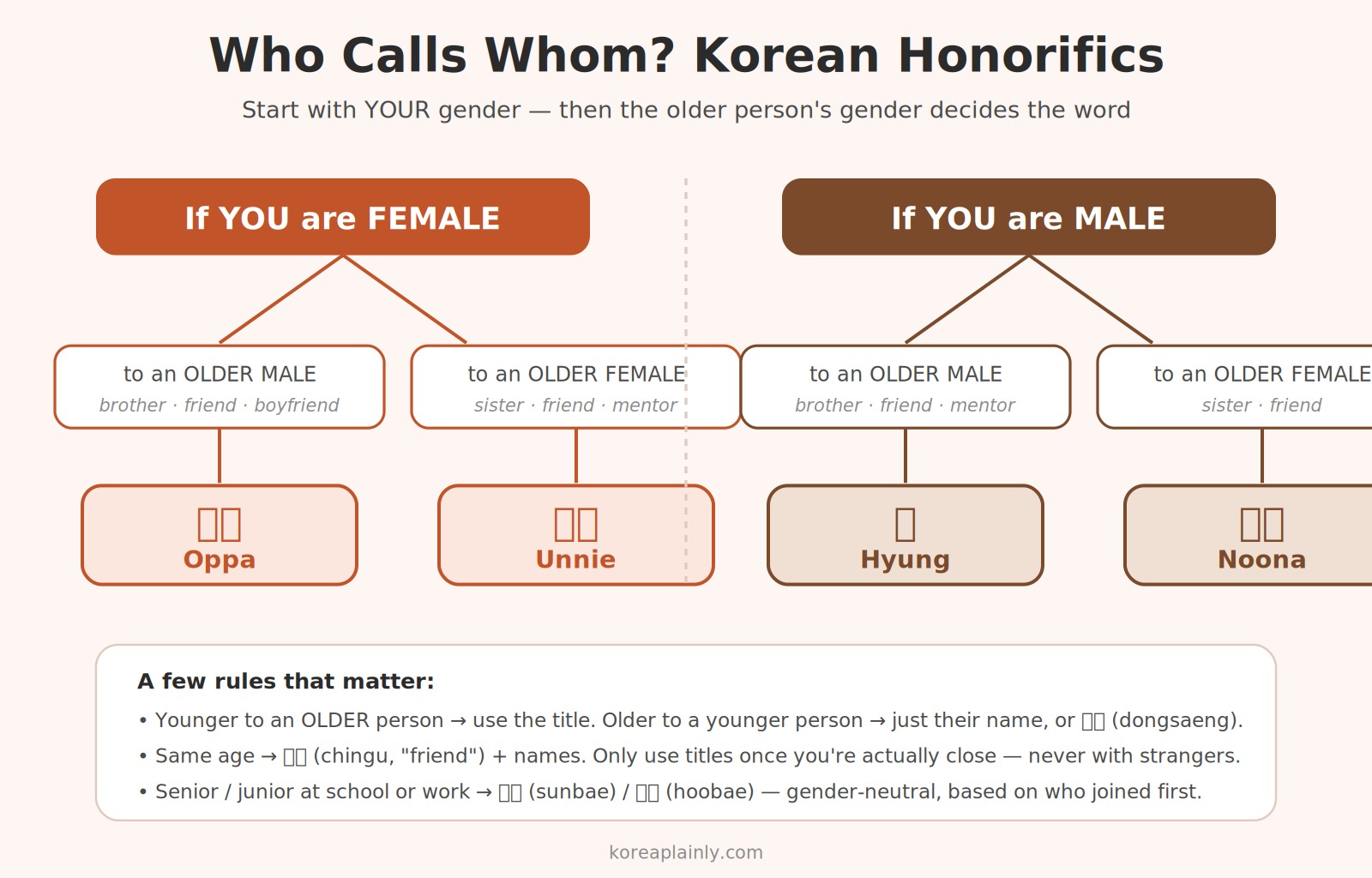
The core four: it depends on YOUR gender
Here’s the key that trips everyone up: these four words all essentially mean “older brother” or “older sister,” but which one you use depends on your own gender first, then the gender of the older person. So two people can call the exact same older woman by different words.
- Oppa (오빠) — used by a female to address an older male (older brother, older male friend, or boyfriend).
- Unnie (언니) — used by a female to address an older female (older sister, older female friend).
- Hyung (형) — used by a male to address an older male (older brother, older male friend, mentor).
- Noona (누나) — used by a male to address an older female (older sister, older female friend).
Quick way to remember it: if you’re female, you only use oppa and unnie. If you’re male, you only use hyung and noona. A common foreigner mistake is a man using “oppa” or “unnie” — those are female-speaker words.
They’re not just for family
These titles started as family words but extend far beyond blood relatives — to friends, classmates, coworkers, and romantic partners. In fact, Korean women very commonly call an older boyfriend “oppa” as a term of affection, which is why the word shows up constantly in K-pop and K-dramas. There’s even a beloved K-drama genre called “noona romance,” where a younger man pursues an older woman.
The rules that matter (and where foreigners slip up)
- You need a relationship first. You don’t call every older person oppa or hyung. Using these titles with a stranger is presumptuous — wait until you’re actually close, or until they invite you to.
- The age gap should be reasonable. These feel natural within roughly one to ten years. Calling someone twenty years older “oppa” feels strange; for much older people, other terms fit better.
- The relationship is asymmetric. The younger person uses the title; the older person just uses your name (often with the affectionate suffix 아/야, like “Minsu-ya”), or calls you dongsaeng (동생, “younger sibling”).
- Same-age friends call each other chingu (친구, “friend”) and use each other’s names.
- Fans use it too. Female K-pop fans calling a male idol “oppa” is a whole phenomenon — a parasocial use of the term to express affection and closeness.
Beyond siblings: sunbae and hoobae
Two more you’ll hear constantly, especially in school and workplace settings:
- Sunbae (선배) — someone senior to you in a specific institution (school, company, club). It’s gender-neutral and based on when you joined, not strictly age. A 25-year-old who joined a company two years ago is the sunbae of a 30-year-old who just started.
- Hoobae (후배) — the junior: someone who came after you. No negative meaning — hoobae are guided and looked after by their sunbae.
One rule above all
When in doubt, don’t rush it. Use the person’s name plus the polite suffix -ssi (씨) until a friendship forms, and stick to polite speech until someone invites you to relax it (Koreans call this “dropping to banmal”). The good news: Koreans are genuinely understanding with foreigners who are learning, and won’t be offended by an honest mistake. Getting these right, though, shows a real awareness of how Korean relationships work — and once you notice them, you’ll hear them everywhere in every drama and song.