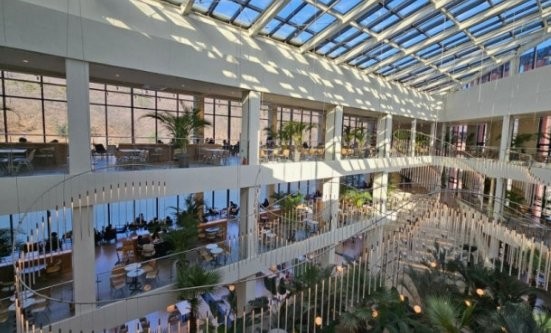
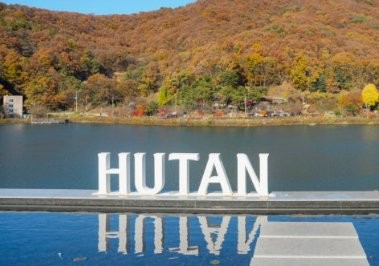
One of the first things that surprises visitors to Korea isn’t a palace or a temple — it’s the cafés. They’re everywhere, they’re enormous, and Koreans treat them as a second living room. Recently I drove out to HUTAN, a café near Onam Reservoir in Namyangju, just outside Seoul. Calling it a “café” undersells it: it sits on about 5,000 pyeong (roughly 16,500 m²) of land, spreads across three floors, seats 300-plus, and has parking for over 200 cars. It felt less like a coffee shop and more like a resort.
That scale isn’t a fluke. It’s a window into one of the most distinctive parts of daily Korean life.
Why are there so many cafés in Korea?
The numbers are staggering. Korea passed 100,000 coffee shops in 2022 — nearly double the combined store count of the country’s four biggest convenience-store chains. The average Korean now drinks over 400 cups of coffee a year, among the highest in the world. And Seoul has more Starbucks locations than any other city on earth — more than New York.
A few reasons why:
- The café is a “third place.” Korean homes and offices are often small, so the café is where people actually meet — first dates, catch-ups, study sessions, even work. Students camping with a laptop all afternoon (Koreans jokingly call them 카공족, “café-study tribe”) are a normal sight.
- Cafés and restaurants have separate jobs. Korean restaurants generally don’t serve coffee or dessert, and the meal is quick. So the ritual is: eat at the restaurant, then move to a café for the drink and the sitting-around. Two venues, one outing.
- Instagram runs on cafés. In a 2023 survey, 38% of café customers named social-media visibility as a reason to visit. A photogenic café is its own attraction.
Why are they so huge?
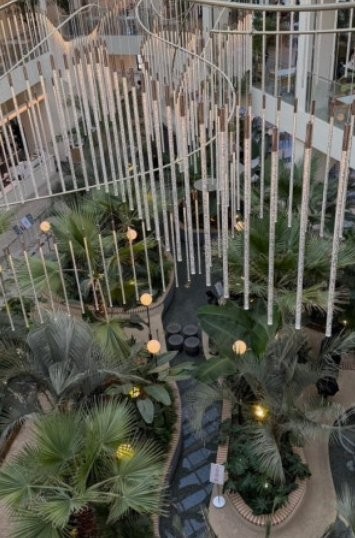
Beyond the corner coffee shop, Korea has a whole category of destination “big cafés” (대형카페) — often converted warehouses or purpose-built glasshouses on the edge of the city, built around a bakery and a view. HUTAN is a textbook example: it’s the flagship of a Seoul premium bakery brand (MARQUE), its name means “forest” in Indonesian, and it’s designed around floor-to-ceiling windows looking onto the reservoir, with palms and natural light inside. People don’t drive an hour for the coffee. They come for the space — the bakery, the photo spots, the water view across the seasons.
That’s the key mental shift: a big café isn’t selling you a drink. It’s selling you a place to spend an afternoon.
What it costs — a quick budget guide
This is where a lot of visitors get caught out. Prices swing widely depending on the type of café:
- Budget (₩2,000–3,000): Chains like Mega Coffee, Compose, and Ediya sell a large americano for around ₩2,500. Grab-and-go, not for lingering.
- Mid-range (₩4,000–5,000): This is where Starbucks sits — a standard americano runs about ₩4,500. Reliable, comfortable, plenty of outlets.
- Premium experience (₩7,000+): Big destination cafés like HUTAN charge around ₩7,500 for an americano, with pastas and signature dishes well above that. You’re paying for the building and the view, not just the cup.
So the honest tip: if you just want caffeine, a big café is not the cheap option — go to Mega. If you want an experience, that’s exactly what the big café is for.
The twist: in Korea, even Starbucks is a destination
Here’s the part that surprises coffee snobs. Because Seoul is the most Starbucks-dense city in the world, the chain competes by making some branches genuinely worth a trip. A few standouts: the Yangpyeong DTR store is Korea’s largest Starbucks — three floors with panoramic windows over the South Han River; the Daegu Jongno store is the world’s first Starbucks inside a 100-year-old hanok (traditional house); the Insadong branch is the only Starbucks on earth with its main sign written entirely in Hangul; and the Seoul Wave store floats on the Han River itself. Several mountain and seaside branches even sell drinks you can’t get anywhere else. In Korea, “let’s just go to Starbucks” can still mean going somewhere special.
A few practical tips
- Big destination cafés usually don’t take reservations — you queue on arrival, and weekends get packed. Weekday mornings are calmest.
- Free Wi-Fi is basically standard; big chains have the most power outlets.
- If you want to sit and work, head for a Starbucks-type chain or a dedicated study café — small indie cafés sometimes discourage laptop camping.
Cafés are one of the everyday rituals that make Korea feel like Korea. Order the way locals do — a quick americano on a budget chain, or a slow afternoon at a glasshouse café with a view — and you’ll have seen a side of the country most first-time itineraries skip.
Cafés are one everyday ritual; food is another — here’s what Koreans actually order at a Korean-Chinese restaurant.