Korea has four dramatically different seasons, and picking the right one can completely change your trip — cherry blossoms, golden foliage, festival nights, or a quiet snowy city. The short answer: spring (March–May) and autumn (September–November) are the most comfortable for sightseeing, and if you can only choose one month, make it April or October. But the real answer depends on what you want out of the trip. Here’s the full picture, season by season, plus how to decide based on your priorities and what to pack.
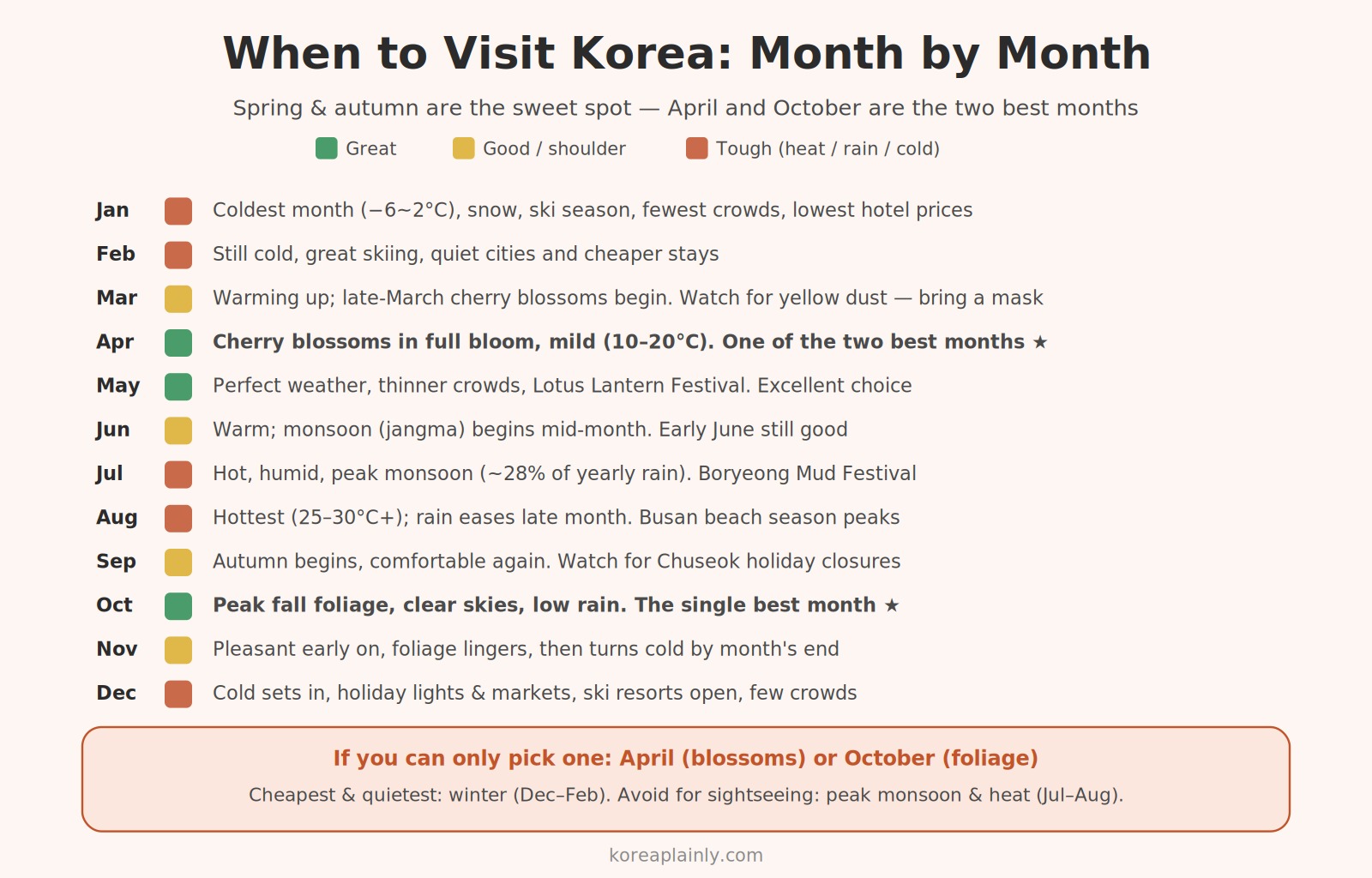
Spring (March–May): cherry blossoms and mild weather
Spring is Korea’s most popular season. Temperatures climb from around 5°C into the low 20s, skies are mostly dry, and late March into early April brings the famous cherry blossoms in full bloom across Seoul, Busan, and Jinhae. April is arguably the best month of the year. May keeps the perfect weather as the blossoms fade, with thinner crowds and the beautiful Lotus Lantern Festival lighting up Seoul. Two heads-ups: in March and April, fine yellow dust (hwangsa) can blow in from the west — packing a mask is smart — and cherry blossoms fall quickly once it rains, so if you see rain in the forecast, go see them first.
Summer (June–August): heat, monsoon, and festivals
Summer is the tough season for sightseeing. The monsoon (jangma) begins in mid-to-late June and peaks in July, when Seoul gets a huge share of its yearly rain. July and August are hot and very humid, often above 30°C. That said, summer has real perks: the Boryeong Mud Festival, buzzing beaches in Busan and Jeju, and lower flight prices. If you come, aim for mid-to-late August when the rain eases, keep indoor options ready for the wettest days, and remember air conditioning is everywhere indoors.
Autumn (September–November): the foliage season
Autumn rivals spring as the best time to visit. After Chuseok — the harvest holiday, when many businesses close, so plan around it — the weather turns crisp and clear. Fall foliage sweeps down from Seoraksan in late September and blazes across the country through October into early November. October is widely considered the single best month to visit Korea: peak color, clear skies, and the most comfortable hiking weather of the year, ideal for Bukhansan or Seoraksan.
Winter (December–February): snow, ski, and low prices
Winter is cold — often below freezing, with January the coldest month — but it has its own appeal: snow, holiday lights and markets, excellent skiing, the fewest crowds, and hotel prices that can drop 30–50% below peak. Bring serious cold-weather gear, and pick up hand warmers, sold everywhere for about ₩500–1,000.
When to go, by what you want
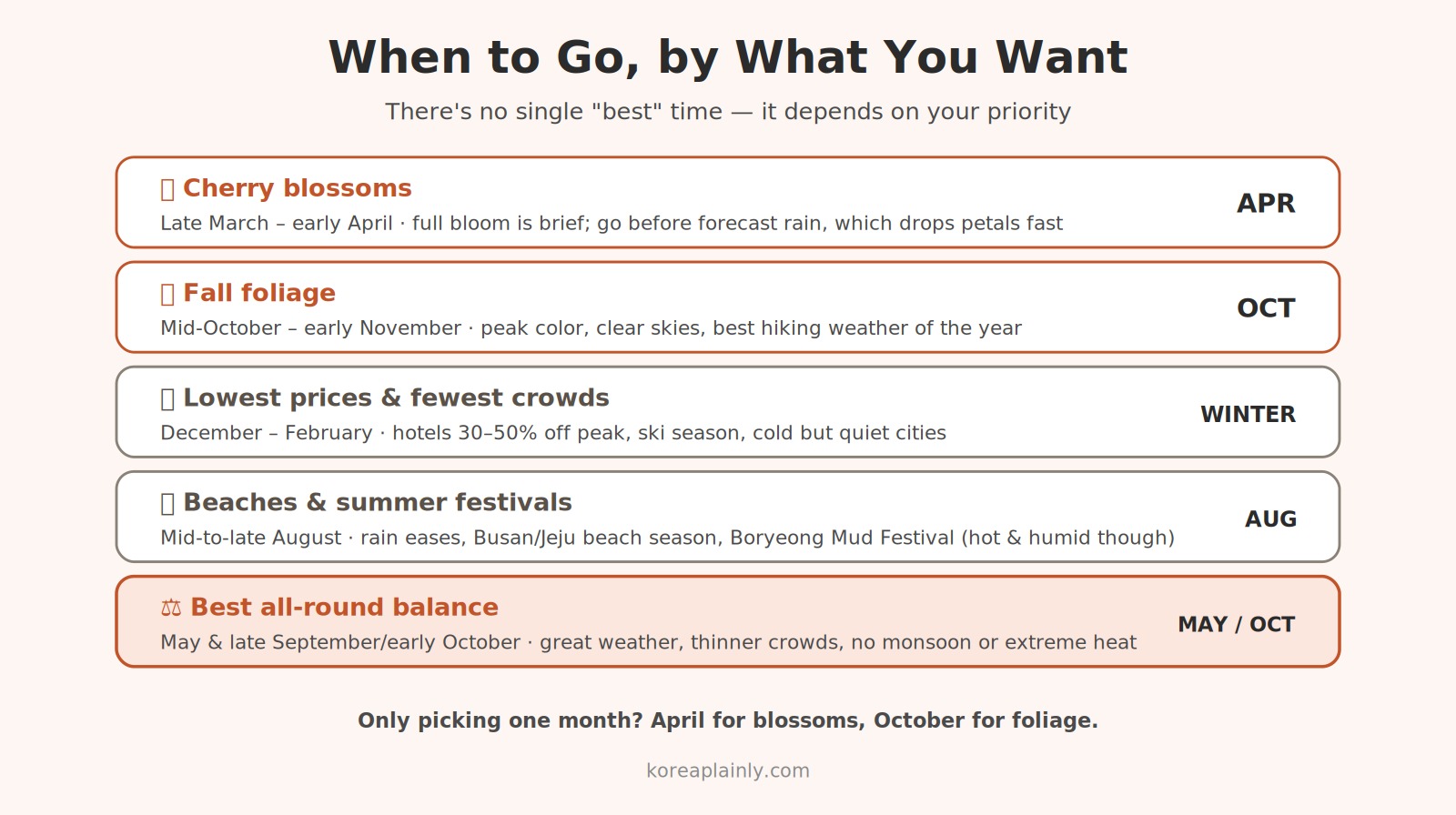
There’s no single “best” time — it depends on your priority. For cherry blossoms, target early April (and move fast if rain threatens). For fall foliage and the best hiking, mid-to-late October. For the lowest prices and fewest crowds, travel in winter. For beaches and summer festivals, mid-to-late August once the rain eases. And for the best all-round balance of weather, cost, and crowds, May and late September to early October are hard to beat.
What to pack, by season
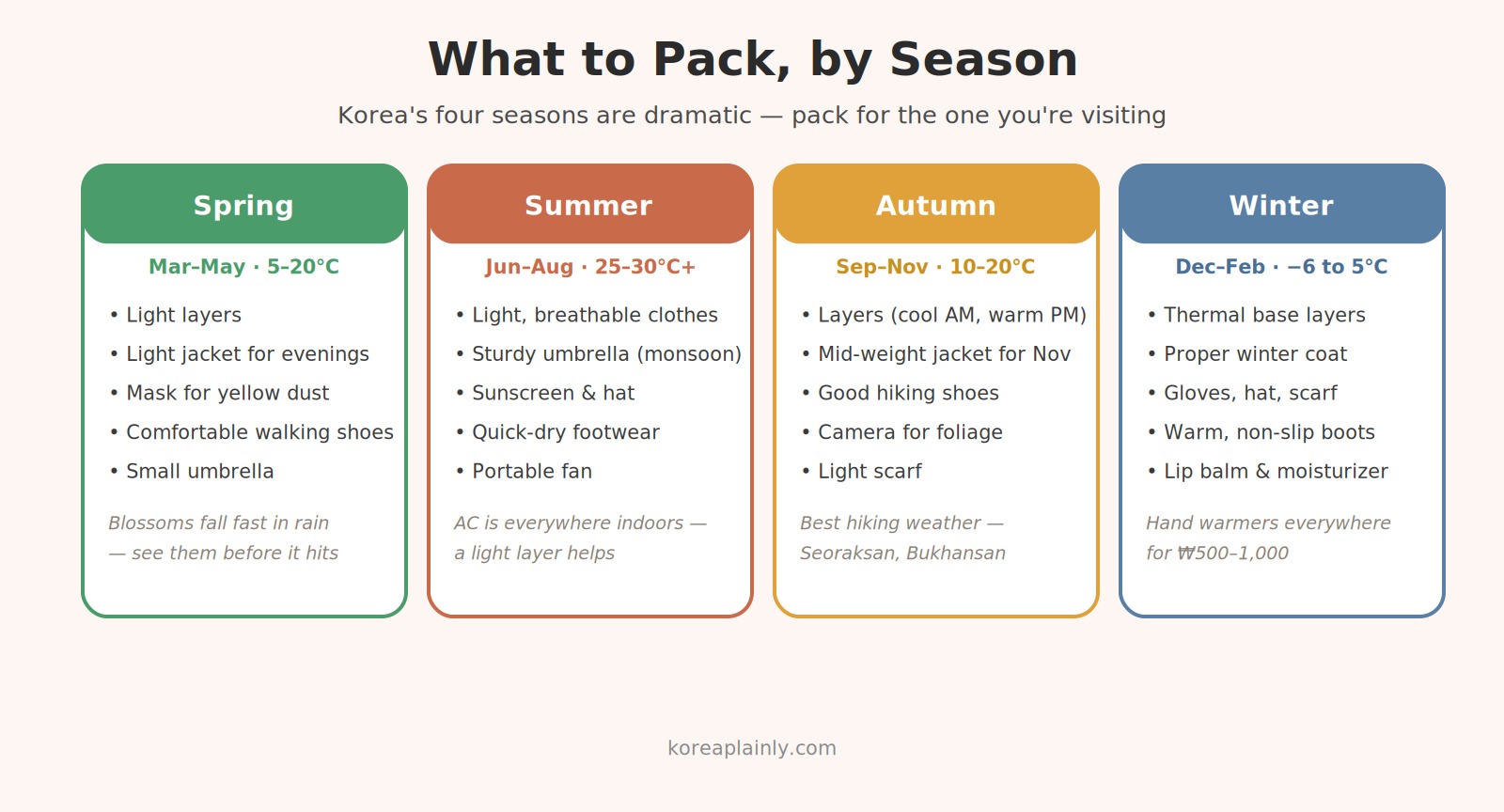
Because the seasons are so distinct, packing depends heavily on when you go. Spring and autumn call for layers and a light-to-mid jacket for cool mornings and evenings. Summer needs light, breathable clothes plus a sturdy umbrella for the monsoon. Winter demands genuine cold-weather gear — thermal layers, a proper coat, gloves, and a hat are not optional in January and February. Comfortable walking shoes matter year-round, and good hiking shoes are worth it in autumn.
So when should you go?
If you want the easiest decision: April for cherry blossoms, or October for fall foliage — the two most reliable months for beautiful, comfortable weather. Travel in winter for the lowest prices and fewest crowds, and approach peak monsoon and midsummer heat (July–August) with flexible, indoor-friendly plans. Whenever you land, matching your timing to what you actually want to see is what turns a good trip into a great one.