On the hottest days of the Korean summer, restaurants serve a boiling stone bowl of chicken soup and people queue in the street to eat it. The logic looks backwards from outside. It isn’t.
The three hottest days of the lunar summer are called boknal (복날), and on each of them a significant portion of the country eats samgyetang — a whole young chicken stuffed with glutinous rice and ginseng, simmered until the meat falls off the bone, served at a temperature that makes you sweat before the first spoonful.
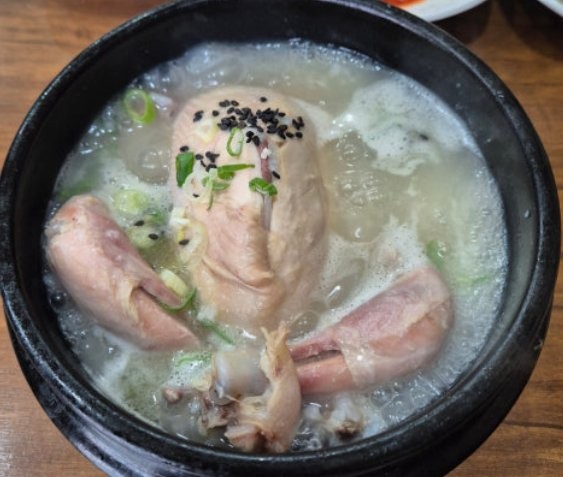
What boknal actually is
Three days spread across roughly a month: chobok (초복, first), jungbok (중복, middle), and malbok (말복, last). They fall on the lunar calendar, generally between mid-July and mid-August, and they mark the stretch Koreans call sambok — the deepest heat of the year.
They are not public holidays. Nothing closes. But restaurants prepare for them the way a bakery prepares for a holiday, and samgyetang places routinely run queues out the door on all three.
The dates shift each year, which is why a visitor can be in Seoul in August and encounter either an unremarkable Tuesday or a citywide event, depending on the calendar.
Fight heat with heat
The principle is called iyeol-chiyeol (이열치열) — literally, control heat with heat.
The traditional reasoning runs like this. In extreme summer heat, the body pushes its energy outward to cool the surface, leaving the core depleted. Cold food makes that worse. Hot, restorative food replenishes what the heat has drained.
That is the traditional frame, and it is worth stating plainly that it is a cultural and traditional-medicine principle rather than a clinical claim. What is observably true is the experience: you eat something scalding, you sweat properly, and afterwards the ambient heat feels less oppressive. Koreans have a word for the sensation of relief that follows — shiwonhada (시원하다), which translates as “cool” but is used for hot soup as often as for cold drinks.
That semantic overlap tells you most of what you need to know. Cooling, in Korean, is not primarily about temperature.
Why chicken, and why this chicken
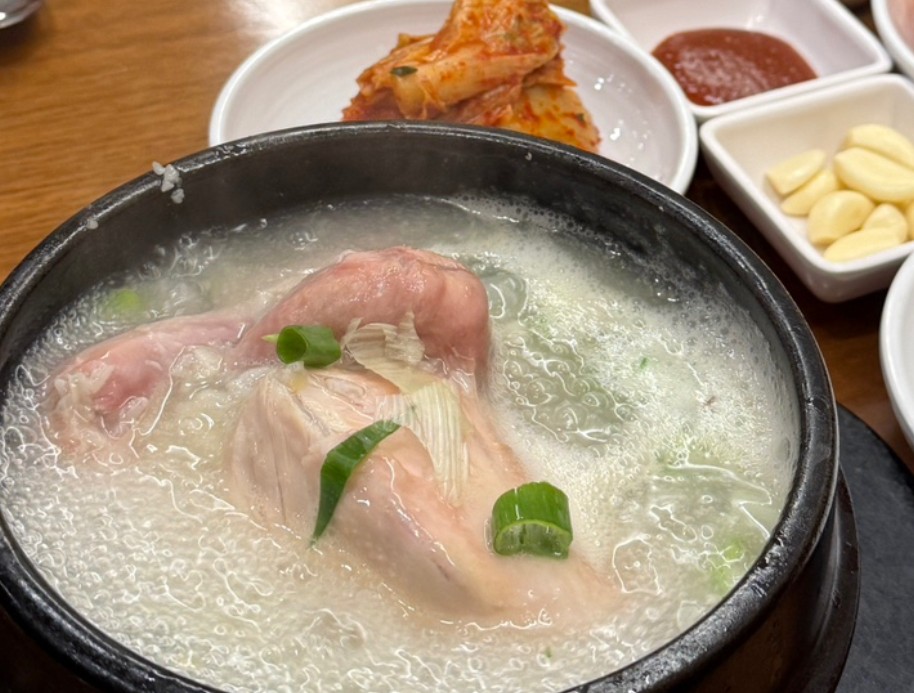
Not any chicken. Samgyetang uses yeonggye (영계), a young spring chicken small enough to fit in a single serving bowl and sit inside a stone pot whole.
The size is functional. A young bird has softer bones and less connective tissue, so it cooks through in the time it takes the rice inside to soften, and the meat pulls away with a spoon rather than needing a knife. A full-grown chicken in the same pot would give you tough meat and undercooked rice.
The ginseng is not a garnish. Sam (삼) in samgyetang is ginseng, and it is the reason the dish exists in its current form. The full name means ginseng-chicken-soup, in that order. Ginseng is classified in traditional Korean medicine as warming and restorative, which is precisely the property the dish is built around. Take it out and you have chicken soup.
Alongside it in the cavity: glutinous rice, whole garlic cloves, jujube dates, sometimes chestnut. The rice absorbs the broth from inside while the broth takes on starch from the rice — which is why samgyetang broth is cloudy and slightly thick rather than clear.
How to eat it
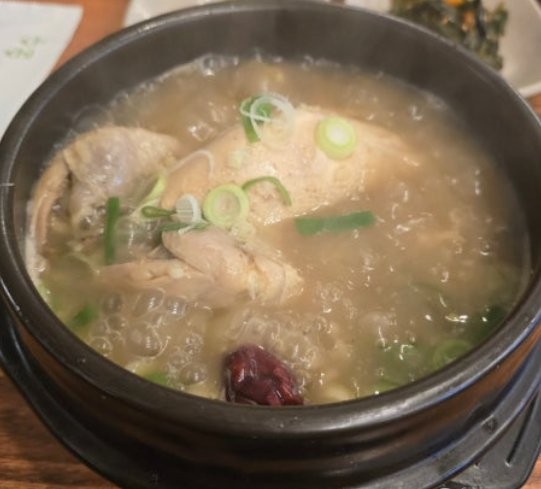
The bowl arrives boiling and stays hot for a long time. There is a sequence, and following it makes the meal considerably better.
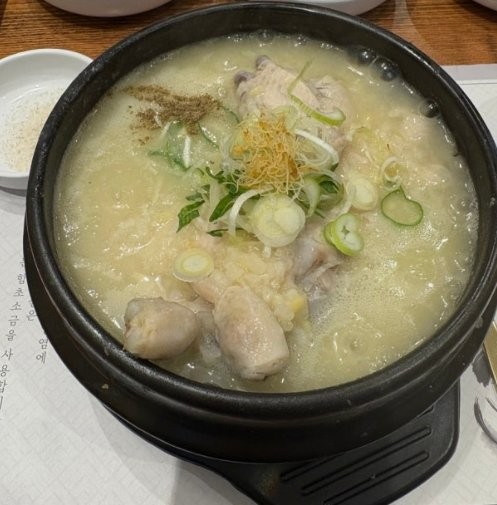
First, season the broth yourself. It arrives deliberately underseasoned. There will be a small dish of salt and black pepper — the standard method is to mix a little, dip the chicken into it, and add salt to the broth gradually rather than all at once. This is not the restaurant forgetting.
Then open the chicken. Use the spoon to split it and expose the rice inside. Some of that rice will fall into the broth, which is intended.
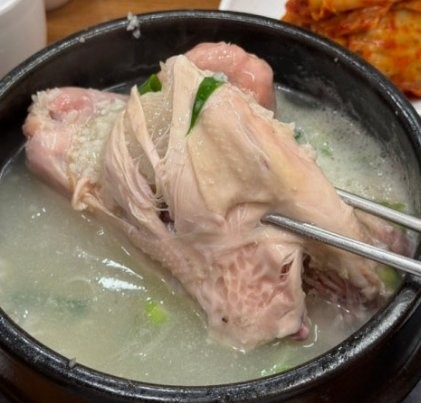
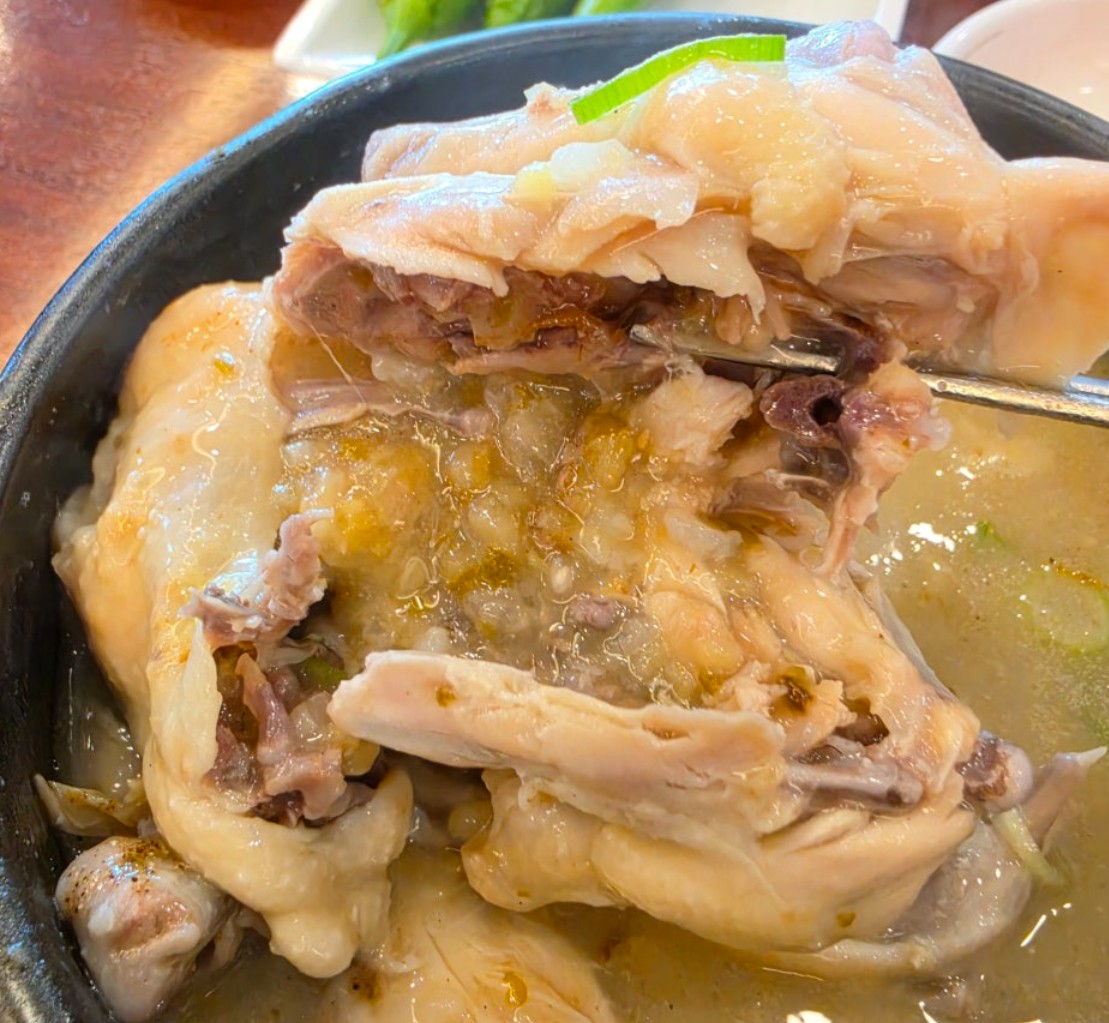
Work through the whole bird. Nobody will fillet it for you. You separate meat from bone with a spoon and chopsticks, and there will be bones left at the end. A small dish for them is usually provided.
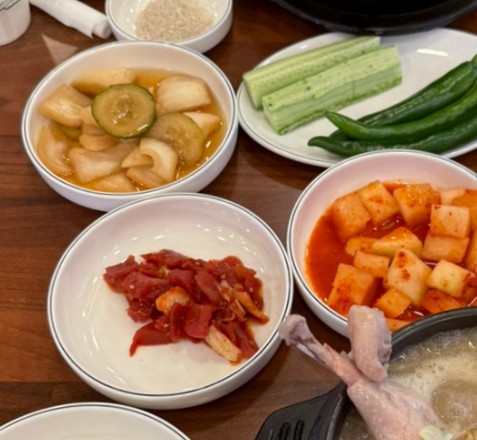
Take the kimchi seriously. Samgyetang is served with kkakdugi — cubed radish kimchi — rather than cabbage kimchi, and this is not arbitrary. The broth is rich and mild; the kkakdugi is sharp, cold and crunchy. It resets your palate between mouthfuls in a way cabbage kimchi doesn’t.
The ginseng liquor is optional. Many places bring a small bottle of insamju on the house. It is strong, and it is not obligatory.
The other boknal foods
Samgyetang is the most visible but not the only one.
Chueotang (추어탕), loach soup, is the older and more rural tradition, still dominant in parts of the country.
Jeonbokjuk (전복죽), abalone porridge, appears as the higher-end option.
Naengmyeon — cold buckwheat noodles — is the direct contradiction, and Koreans see no problem with this. Plenty of people fight heat with cold on exactly the same days. If that is your instinct, naengmyeon is the dish.
Historically, dog meat was associated with boknal. It has declined steeply over decades and is now the subject of a legislated phase-out. It is not something a visitor will encounter, and mentioning it is only useful so that outdated guidebooks don’t confuse you.
If you are visiting
Go early or late. On boknal itself, an established samgyetang restaurant will have a queue between noon and two. Eleven-thirty or after two is a different experience entirely.
You don’t need to wait for boknal. Samgyetang is served year-round and is arguably better in winter, when nobody is queueing.
One bowl is one serving. It is priced per person and comes assembled — this is not a dish for sharing.
It is not spicy at all. If Korean food’s reputation has been putting you off, this is one of the gentlest things on any menu here. So is bulgogi, for the same reason.
Frequently asked questions
When is boknal? Three days on the lunar calendar, usually falling between mid-July and mid-August. The dates change annually.
Why do Koreans eat hot soup in summer? The principle is iyeol-chiyeol — controlling heat with heat. Hot restorative food is believed to replenish energy the heat has drained.
Is samgyetang spicy? No. It is mild and savoury, with no chilli at all.
Do I need to book? On boknal itself, popular restaurants get very busy around lunch. On any other day, no.
Can I share one bowl? It is designed as a single serving — one whole small chicken per person.
Is samgyetang only available in summer? No. It is served year-round, and the winter version is easier to get a table for.