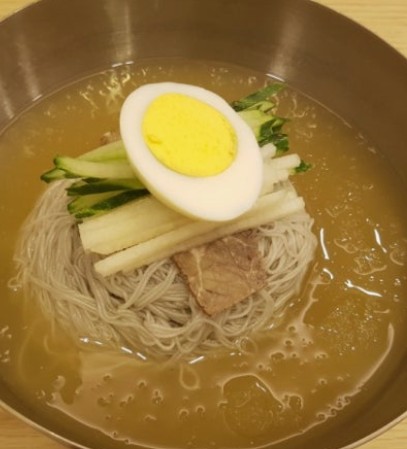
When Korea’s summer heat peaks, one dish takes over: naengmyeon (냉면), literally “cold noodles.” Picture a mound of chewy, springy noodles served either in an icy, tangy broth or tossed in a fiery red sauce — chilled, refreshing, and unlike anything in most Western kitchens. If samgyetang is Korea’s “fight heat with heat” summer dish, naengmyeon is the opposite instinct: beat the heat by going ice-cold. Here’s what it is, the choices you’ll make, and how to eat it without the rookie mistakes.
What is naengmyeon?
Naengmyeon is a bowl of long, thin, remarkably chewy noodles served cold, rinsed in ice water until they turn springy — that deliberate, elastic chew is the whole point. A noodle that snaps apart too easily is considered inferior.
The noodles come in two main styles, and this is where first-timers should pay attention:
- Hamhung-style noodles are made from potato or sweet-potato starch, which makes them extra chewy and almost glass-like and translucent. They’re the safer bet for newcomers — the springy texture is fun and easy to like.
- Pyongyang-style noodles are made mostly from buckwheat (memil), giving them a darker color, an earthy aroma, and a softer bite. They’re more of an acquired taste — subtle and beloved by purists, but some first-timers find them plain.
If you’re new to naengmyeon, look for the chewy starch (Hamhung-style) noodles first — you’re much less likely to be disappointed.
Here’s the twist most visitors don’t expect: naengmyeon was originally a winter food. In old Korea, people ate icy noodles indoors on warm ondol (heated floors) — cold food, warm room. It became today’s summer icon more recently. And it carries real history: after the Korean War, refugees from the North brought their regional recipes south, founding legendary Seoul restaurants like Woo Lae Oak (since 1946). For many Koreans, a bowl of naengmyeon is quietly tied to the story of a divided country — the same dish famously shared at the 2018 inter-Korean summit.
Mul vs bibim: the choice you’ll make at the table
Whichever noodle you get, the menu comes down to how it’s served — in broth, or in sauce:
- Mul naengmyeon (물냉면) — “water” cold noodles, served in a clear, icy beef-and-radish broth that’s tangy, subtly sweet, and deeply refreshing. Sometimes it’s chilled until the broth turns slushy. This is the classic “cool down from the inside” bowl.
- Bibim naengmyeon (비빔냉면) — “mixed” cold noodles, with no broth; instead the noodles are tossed in a glossy, fiery gochujang sauce that’s sweet, spicy, and sharp with vinegar. A small cup of broth usually comes on the side to sip between bites. This is the one for spice lovers.
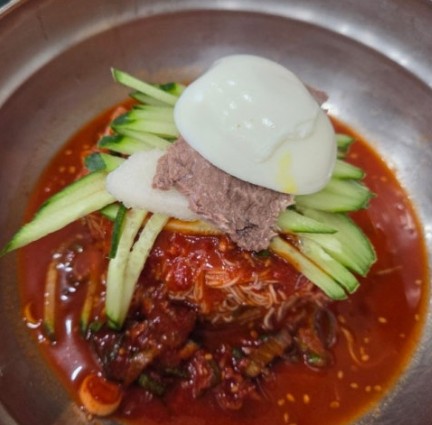
Not sure? If you want pure refreshment, go mul; if you want heat, go bibim. Either way, the chewy Hamhung-style noodle underneath is what makes it satisfying to eat.
How to eat it like a local
A few things trip up first-timers:
- Cut the noodles. When your bowl arrives, use the scissors provided to snip through the noodles a few times. Korean noodles are made long on purpose — they symbolize longevity — but naengmyeon is nearly impossible to eat gracefully without cutting. No scissors? Ask: “myeon jallajuseyo” (면 잘라주세요).
- Look for the meat — it’s a quality sign. If your bowl comes topped with a few thin slices of boiled beef (like the one pictured), that’s usually a good sign: it often means the restaurant simmers its own broth from real meat rather than mixing it from seasoning powder. It isn’t a hard rule, but at serious naengmyeon specialists, that slice of meat on top is almost always there.
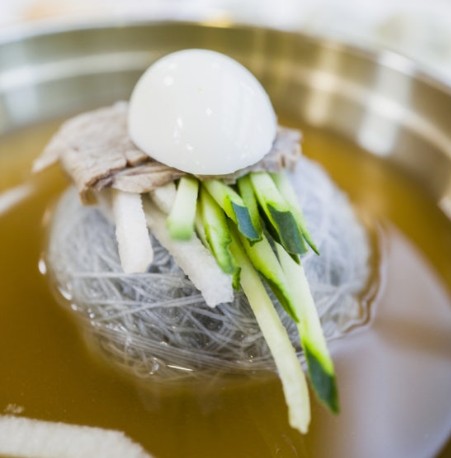
- Season gradually. Every table has vinegar (sikcho) and bright-yellow hot mustard (gyeoja). Add a little at a time — the flavor shifts noticeably with each addition. For bibim, mix the whole bowl thoroughly from the bottom.
- One purist note. At old-school Pyongyang buckwheat houses, some regulars add nothing at all — no vinegar, no mustard — to taste the clean broth and the natural break of the memil noodle. If that’s where you’ve landed, try a few bites plain before reaching for the bottles.
When and where Koreans eat it
Naengmyeon peaks from May through September, when temperatures climb past 30°C and noodle shops fill with office workers at lunch and families queueing on weekends. But the most Korean way to meet it is at the end of a barbecue: after an hour of grilling samgyeopsal or galbi, a cold bowl of mul naengmyeon arrives to cleanse the palate — the smoky-then-icy contrast is a classic finish to a Korean meal.
So this summer, order a bowl the way locals do: pick the chewy Hamhung-style noodles, choose mul for cool refreshment or bibim for heat, look for that slice of meat on top, cut the noodles, and season to taste — the ice-cold opposite of a boiling bowl of samgyetang.