If you have made bulgogi at home and wondered why the restaurant version tastes noticeably better, the answer is not the marinade. It is heat, and specifically how much of it arrives in the first ten seconds.
Bulgogi (불고기) is thin-sliced beef marinated in soy sauce, sugar, garlic, sesame oil and grated pear, then cooked over heat. The name is literally bul (fire) plus gogi (meat). It is the most approachable dish in the entire Korean BBQ category — sweet, savoury, and completely without chilli.
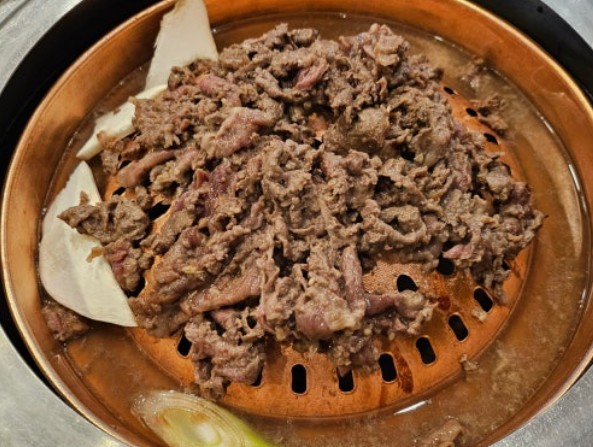
The marinade, and what the pear is doing
The base is soy sauce, sugar, garlic, sesame oil, spring onion and black pepper. That much is standard.
The ingredient that separates good bulgogi from sweet beef is grated Asian pear. It is not there for sweetness — it contains enzymes that break down muscle protein, which is why properly marinated bulgogi has that yielding texture rather than simply being thin beef with sauce on it.
Restaurants take this further. Alongside pear and onion they may use kiwi, pineapple, or a commercial tenderising enzyme, measured carefully because the same enzymes that soften meat will turn it to paste if left too long. That precision is part of why restaurant bulgogi can feel like it dissolves in a way home bulgogi rarely does.
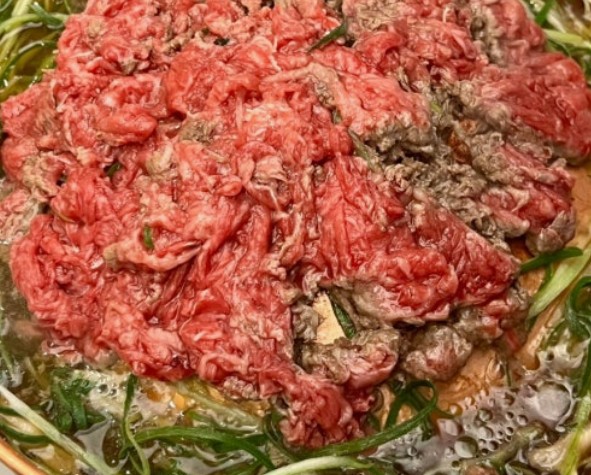
Sugar matters for a second reason: it caramelises. The dark, slightly sticky edges on well-cooked bulgogi are sugar browning, and they carry a lot of the flavour.
Why yours tastes different
Here is the part almost no recipe mentions.
A home hob does not have enough power. When you put cold marinated beef onto a domestic gas ring or induction plate, the pan temperature drops immediately and takes time to recover. During that time, the meat releases its moisture — and once there is liquid in the pan, the beef is no longer grilling. It is simmering in its own juices.
That is why home bulgogi often comes out grey-brown, soft, and slightly watery. Nothing was done wrong. The pan simply never got hot enough to stay hot.
A commercial burner or charcoal does the opposite. The surface is hot enough that moisture flashes off on contact instead of pooling, so the meat’s surface stays dry — and dry surfaces brown. That browning is the Maillard reaction, the chemistry that produces roasted, savoury, complex flavours that no amount of marinade can replicate.
So the difference is not a secret ingredient. It is that one method browns the beef and the other steams it.
What you can do about it at home:
- Get the pan properly hot before anything touches it — hotter than feels sensible.
- Cook in small batches. Crowding the pan is the single fastest way to drop the temperature.
- Shake off excess marinade. Liquid going into the pan is liquid you have to boil away.
- Don’t stir constantly. Leave the beef alone long enough for one side to brown.
You will not fully match a charcoal grill in a domestic kitchen. You can get considerably closer.
The three regional styles
Koreans talk about three, and they are genuinely different dishes rather than variations on one.
Seoul style is the one most people mean by “bulgogi.” A domed metal pan with a channel around the edge; broth goes in the channel, thin-sliced beef goes on the dome, and mushrooms, onion and glass noodles cook in the liquid. The result is tender and mild rather than charred, and you eat it with rice. The broth left at the end is not waste — the traditional finish is to drop cold noodles into it.
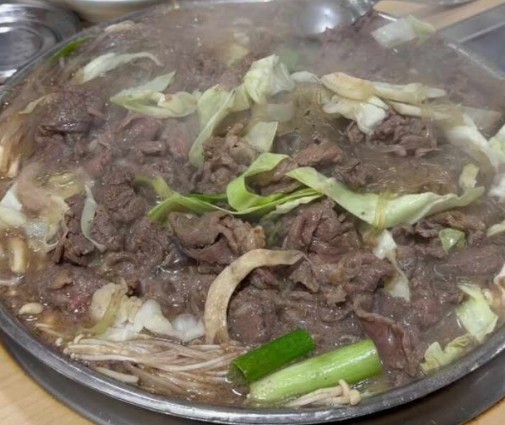
This soupy form is more recent than people assume. Bulgogi originally meant grilled meat, full stop; the broth version appears to have developed around the mid-twentieth century, and by the 1960s “bulgogi” had come to mean the version with liquid for most Koreans.
Gwangyang style, from South Jeolla, goes the other way. Beef is sliced thin, seasoned to order rather than marinated in advance, laid on a copper grill and cooked directly over charcoal. No broth at all. Because the seasoning is applied immediately before cooking, the beef flavour stays forward.
Eonyang style, from Ulsan, marinates first and ages the meat before grilling it over white charcoal on a wire rack. It became widely known in the 1960s when workers building the national expressway passed through the area and carried its reputation elsewhere.
The pattern worth noticing: Seoul went indoors and added liquid; Gwangyang and Eonyang stayed on the fire. The regional versions are closer to what bulgogi originally was.
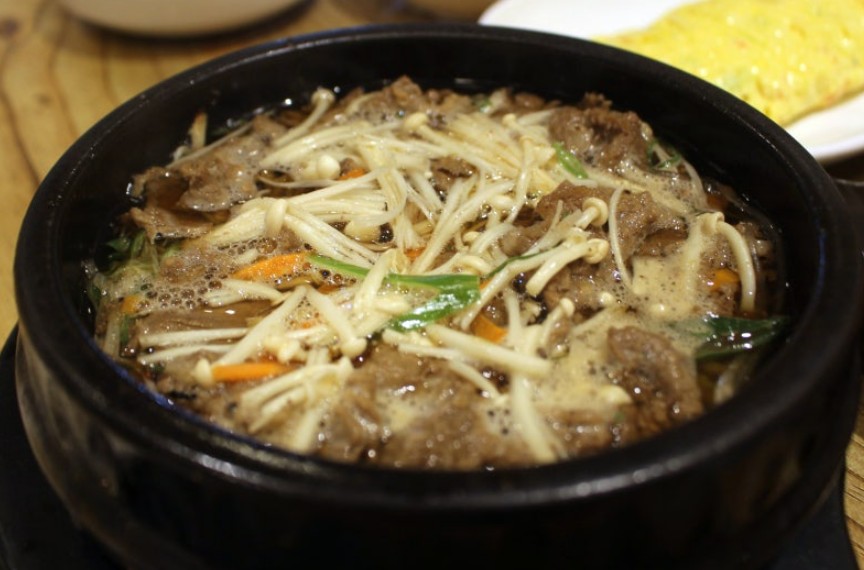
There is also ttukbaegi bulgogi — a single-serving stone pot version, soupier still, which exists mainly because it is easy to portion. It is the standard cheap lunch around Korean universities.
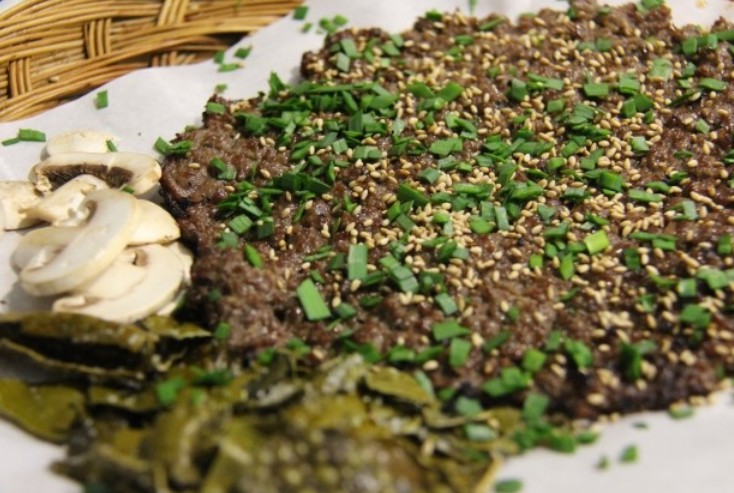
And bassak bulgogi, chopped and pressed thin and grilled until the edges go crisp — the driest version of all.
Bulgogi vs galbi
The two most common Korean beef dishes, and visitors mix them up constantly.
Bulgogi is thin-sliced boneless beef, usually sirloin or brisket, marinated and cooked quickly. Sweeter, softer, cheaper.
Galbi is short rib, usually on the bone, cut thicker, marinated longer, and grilled over high heat. Meatier, chewier, and considerably more expensive.
If you are ordering for someone nervous about Korean food, bulgogi is the safer choice. If you want the more impressive dish, galbi.
How Koreans actually eat it
With rice, not on its own. Bulgogi is seasoned assuming rice will absorb it. Eaten alone it reads as too sweet and too salty; with plain rice the balance is correct.
Wrapped, if it is the grilled kind. Lettuce, beef, a little ssamjang, eaten in one bite. Full mechanics in how to eat Korean BBQ ssam.
With the mushrooms and noodles, if it is Seoul style. The glass noodles soak up the broth and are half the point.
Not with much kimchi. Bulgogi is already sweet-savoury; sharp kimchi fights it more than it complements. Save that pairing for samgyeopsal, where the fat needs cutting.
Ordering it
Bulgogi is often served as a course rather than a portion, especially the Seoul style, which arrives as a pan for the table to share.
It is not spicy. No chilli in the standard marinade at all. This is the dish to order for anyone who has been avoiding Korean food on heat grounds.
Look for the style before the price. A restaurant advertising Gwangyang or Eonyang bulgogi is selling something different from the neighbourhood place with a domed pan, and the two are not really comparable.
Pork bulgogi exists and is common, cheaper, and usually spicier — often made with a gochujang-based marinade. It is a different dish sharing a name.
Frequently asked questions
Is bulgogi spicy? No. The standard marinade is soy sauce, sugar, garlic and sesame oil, with no chilli.
What cut of beef is bulgogi? Usually thin-sliced sirloin or brisket. Boneless, and cut thin enough to cook in under a minute.
What is the difference between bulgogi and galbi? Bulgogi is thin-sliced boneless beef; galbi is short rib, usually bone-in, thicker and more expensive.
Why is restaurant bulgogi better than mine? Heat. Commercial burners and charcoal brown the meat; home hobs let it release moisture and simmer instead.
What does the pear do? Its enzymes break down muscle protein, tenderising the beef. It is not primarily a sweetener.
Is bulgogi always served with broth? No. Seoul style has broth; Gwangyang and Eonyang styles are grilled dry over charcoal.