Walk into a Korean kitchen and you will often find two refrigerators. The second one is not overflow storage. It exists to hold one thing at one temperature, and the fact that an entire appliance category was built around a side dish tells you more about kimchi than any definition can.
Kimchi (김치) is vegetables — usually napa cabbage — salted, coated in a seasoning paste, and left to ferment. That is the short answer. The longer one is that it is a living culture that keeps changing in the jar, which is why the second fridge exists and why no two households produce the same thing.
What fermentation is actually doing
Salting comes first. The cabbage sits in brine for hours, which draws out water and firms the cell walls. This is why properly made kimchi stays crunchy for months instead of turning to mush.
Then the seasoning: gochugaru (Korean chilli flakes), garlic, ginger, spring onion, and salted seafood. The mixture is packed between every leaf, and the jar is closed.
What happens next is bacterial. Lactic acid bacteria consume the sugars in the vegetables and excrete lactic acid, which is what makes kimchi sour and also what preserves it — the acidity makes the jar inhospitable to anything that would spoil it.
The bacterium that matters most for flavour is Leuconostoc. It produces carbon dioxide, which is where the faint fizz in well-made fresh kimchi comes from, and it is the dominant organism during the early, best-tasting stage of fermentation. Research from Korea’s World Institute of Kimchi found that kimchi made during the winter kimjang season carries substantially more Leuconostoc than kimchi made in spring or autumn — which is a scientific explanation for something Korean families had already concluded by taste.
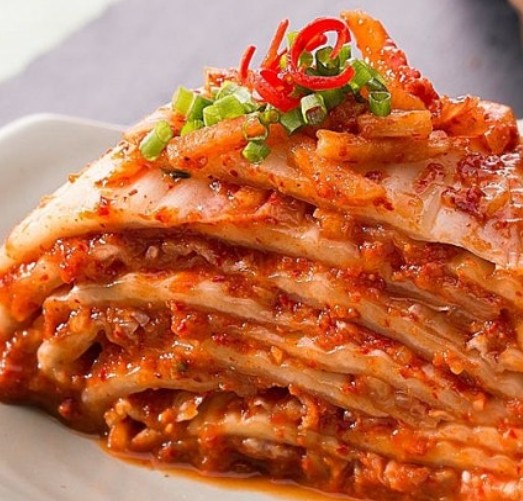
Kimchi does not have a finished state. It moves from fresh and crisp, through the sweet-sour peak, into properly sour, and eventually into deeply aged mugeunji — which is no longer a side dish but a cooking ingredient. Each stage has its own uses, and Koreans do not consider the later stages a failure.
Why Korean homes have a kimchi fridge
Now the second refrigerator makes sense.
Ordinary refrigerators are the wrong tool. They cool by blowing chilled air around, which means the temperature swings every time the door opens, and the moving air dries food out. A standard fridge runs somewhere around 1–5°C and cannot go below zero without freezing things.
Kimchi wants to sit just below zero. Around −1°C, kimchi does not freeze — the salt content prevents it — but fermentation slows to the pace where it holds at its best for months rather than racing past it in weeks. Half a degree warmer and it sours faster; colder and ice crystals rupture the cell walls, which is what turns kimchi soft.
So the appliance cools differently. A kimchi fridge chills the walls of the compartment itself rather than blowing air through it, which holds the temperature within a narrow band and keeps moisture in.
And here is the part worth appreciating: that design copies a hole in the ground.
The traditional method was to bury earthenware jars in the earth over winter. Below about 30cm, from late December through February, Korean soil sits at roughly −1°C and stays there — no daily swing, no drying wind. The kimchi fridge is an attempt to reproduce that buried jar in an apartment, and the engineering brief was essentially “make a hole in the ground you can plug in.”
Burying jars required a yard, which most Koreans no longer have. The appliance arrived in the 1990s and spread quickly for exactly that reason.
Why every family’s kimchi tastes different
Ask Koreans about their mother’s kimchi and you will get a specific answer, because kimchi genuinely varies by household in ways that go beyond preference.
Region determines the seafood. The salted seafood — jeotgal — used in the paste changes the whole character. Around Seoul and Gyeonggi, salted shrimp gives a cleaner, lighter result. Head south to Jeolla and Gyeongsang and you get anchovy sauce, fermented hairtail, sometimes fresh seafood and a glutinous rice paste — heavier, saltier, considerably deeper. These are not small differences; a Seoul person eating Jeolla kimchi notices immediately.
And then there is what nobody can control. Identical recipes in two houses produce different kimchi. The bacteria that end up dominating depend on what was already present — on the hands that packed it, on the chilli powder, on how tightly the jar was filled, on where it was stored and at what temperature. Different microbial populations produce different acids in different proportions, which means different flavour.
Koreans call this son-mat (손맛) — “hand taste” — and use it to describe why a dish tastes like a specific person made it. It sounds like sentiment. It is closer to microbiology.
The main types you will meet
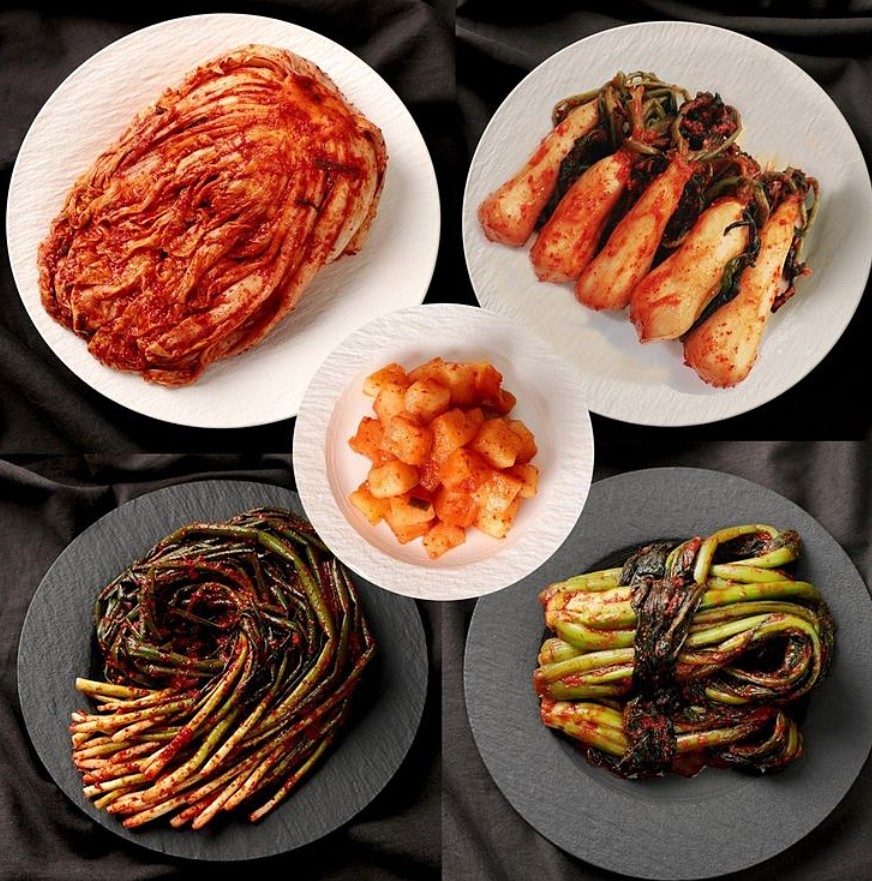
Baechu kimchi is the napa cabbage version and the default. When a Korean says “kimchi” without qualification, this is it.
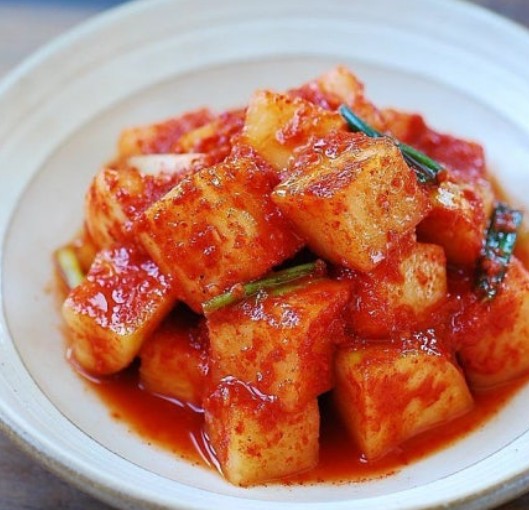
Kkakdugi is cubed radish, harder and crunchier, and specifically what gets served with rich soups like samgyetang or seolleongtang — the sharpness cuts fat in a way cabbage kimchi doesn’t.
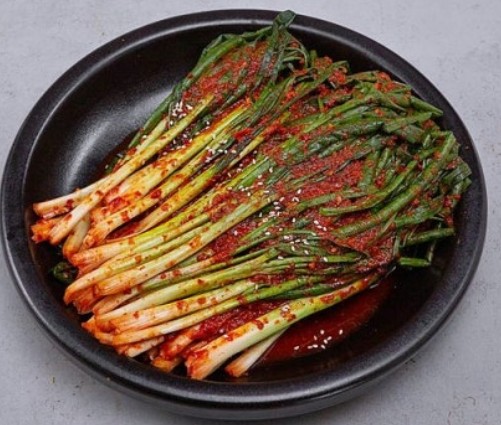
Pa kimchi is made from whole spring onions and is the most pungent of the common types. It pairs with grilled pork.
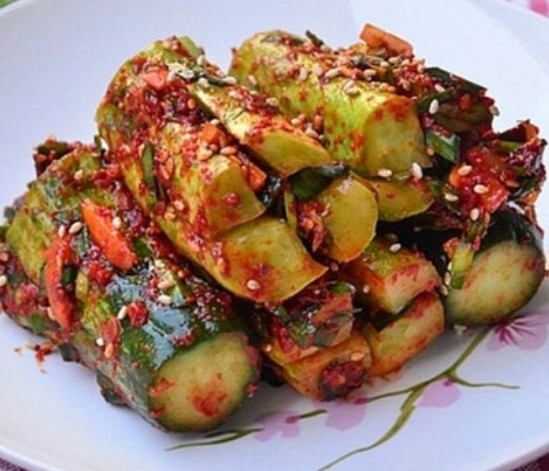
Oi-sobagi is cucumber, stuffed and lightly fermented. It is a summer kimchi, eaten fresh rather than aged, and the most approachable for anyone easing into this.
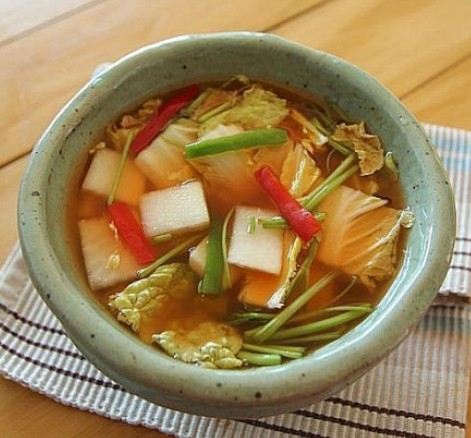
Mul kimchi — water kimchi, including dongchimi — has no chilli at all. It is vegetables in a light, tangy brine, served cold, and Koreans drink the liquid. If you have been told all kimchi is spicy and red, this is the counterexample.
Kimjang, and whether Koreans still do it
Kimjang is the late-autumn practice of making the winter supply — historically hundreds of cabbages, done collectively over days, with the whole extended family involved. It is on UNESCO’s intangible cultural heritage list.
The honest answer about its current state is: yes, but smaller, and for different reasons.
The scale has collapsed. Commercial kimchi is genuinely good now, households are smaller, and nobody has a yard to bury jars in. A family that once made three hundred cabbages might make ten or twenty.
But it has not disappeared, because it turned into something else. Kimjang day now means the family gathering, boiling suyuk — pork belly — and eating it with the fresh, unfermented kimchi straight out of the mixing bowl, with soju. The work is the occasion rather than the point. It functions as a minor holiday.
If you are invited to one, go.
How to eat it
It is free and refillable. Kimchi arrives without being ordered at essentially every Korean restaurant, and asking for more is normal.
Eat it alongside, not before. It is a counterpoint to each bite, not a starter course to finish.
Cook the sour stuff. Kimchi past its fresh stage is not spoiled — it is the required ingredient for kimchi jjigae, for fried rice, and for pancakes. Koreans deliberately age kimchi for this.
Put it on the grill. At a samgyeopsal table, kimchi goes on the edge of the grill to cook in the pork fat. Visitors routinely miss this and it is one of the best things on the table.
Not all of it is spicy. Mul kimchi and dongchimi have no chilli. Even baechu kimchi registers as tangy and savoury more than hot.
Frequently asked questions
Is kimchi always spicy? No. Water kimchi and dongchimi contain no chilli, and even standard cabbage kimchi is more sour and savoury than hot.
Is kimchi vegetarian? Usually not. Most recipes include salted shrimp or anchovy sauce. Temple-style vegan kimchi exists and is increasingly available.
How long does kimchi last? Indefinitely, in the sense that it keeps changing rather than spoiling. It goes from fresh to sour to aged, and each stage has its uses.
Why do Koreans need a special fridge? Kimchi holds best just below freezing, at a stable temperature ordinary fridges cannot maintain without swings or drying the food out.
What is mugeunji? Long-aged kimchi, sour and soft, used as a cooking ingredient rather than a side dish.
Do Koreans still make kimchi at home? Fewer do, and in much smaller quantities. Kimjang survives more as a family gathering than as a necessity.