If you’ve watched almost any BTS livestream, you’ve probably seen them eating these. Paldo Bibimmyeon is a cold, spicy, sweet noodle dish — think of it as the quick, instant version of naengmyeon, Korea’s famous cold noodles — and it’s a summer staple in pretty much every Korean household. It’s also one of those foods Korean idols genuinely love on camera, which is half the reason the rest of the world started paying attention.
Here’s how a Korean actually makes it, step by step, with the cold-water tricks that separate a good bowl from a mushy one. Every photo is from my own kitchen.
Prefer to watch first? Here’s the whole thing in under a minute — then read on for the details.
Short answer: Boil the noodles (no soup powder — this is a cold dish). When the water bubbles up, add a cup of cold water; when it boils again, drain. Rinse the noodles hard in cold water to wash off the starch, then chill them in ice water and drain well. Squeeze in the sauce packet and mix — and the easy trick is to just dig at the center rather than stir. Top with egg, cucumber, or gim.
The BTS story behind the bigger pack
Here’s a fun piece of Korean noodle trivia. Paldo Bibimmyeon packs are famously a little small — one is often not quite enough, so a lot of people just cook two. BTS’s RM clearly agreed. On a V Live broadcast, he said he’d been eating it three days straight without getting tired of it, but that one pack felt too small and two felt like too much — so he wished they’d make a version with about 1.5 times the noodles.
Paldo actually listened. In late 2021 the company announced it would release a bigger portion — about 1.2 times the original (product regulations meant a full 1.5x wasn’t possible). So the next time you wonder why everyone cooks two packs at once, now you know: even a global superstar thought one was too small.
(The connection runs deep enough that in April 2026, all seven BTS members teased an “ARIH” project that fans quickly traced to a Paldo collaboration — the brand had filed the trademark earlier that year.)
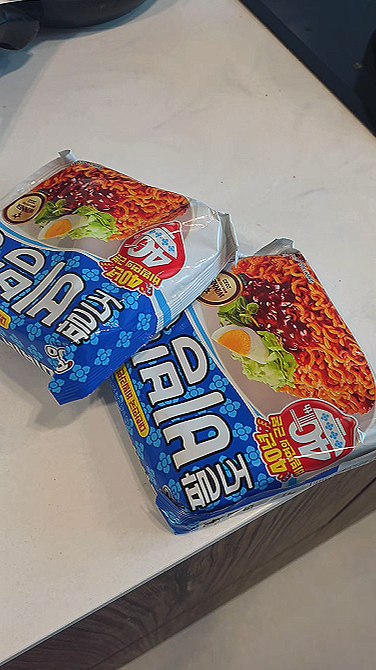 One pack is famously small, so most people cook two. I’m making two here.
Step 1: Boil the noodles
This is a cold dish, so you only boil the noodles — the sauce goes on at the end, not in the water. Drop the noodle blocks into boiling water.
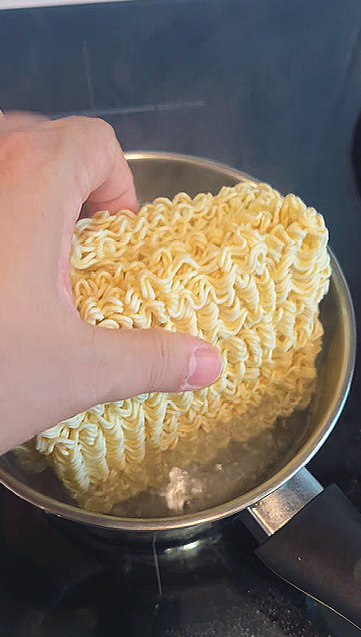 Just the noodles for now. The sauce packet comes later — this is a cold noodle dish.
Step 2: The cold-water shot
Here’s the first Korean trick. When the water boils up and threatens to foam over, pour in about a cup of cold water. When it comes back up to a boil, the noodles are done. This quick temperature drop helps the noodles cook evenly and keeps them springy instead of soft.
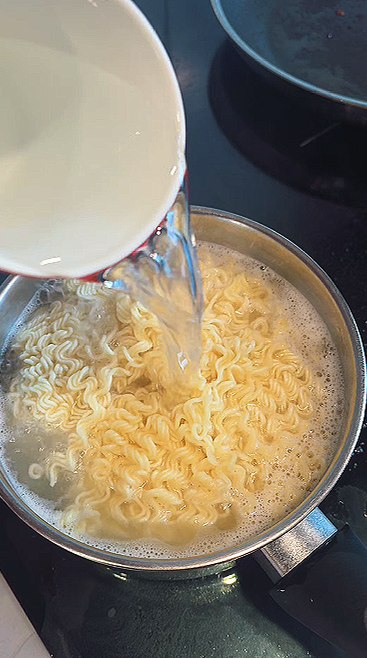 When it bubbles up, add a cup of cold water. It keeps the noodles springy.
Step 3: Rinse off the starch — this is the important one
Drain the noodles and rinse them hard under cold running water. Don’t rush this part. If you don’t wash the starch off properly, the noodles taste gluey and the dish never feels clean and refreshing — which is the whole point of bibimmyeon.
For the best version, rinse until the noodles feel cool and slippery, then chill them in ice water for a moment so they turn icy and extra chewy. That cold, tight texture is what makes a great bibimmyeon.
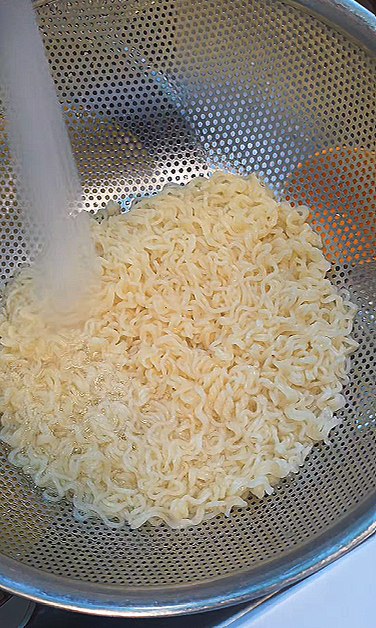 Rinse hard in cold water to wash off all the starch. Skip this and the noodles taste gluey.
Step 4: Drain well — really well
Before the sauce goes on, get the noodles as dry as you can. Excess water makes the sauce thin and the whole bowl taste bland. Shake the strainer out, let it sit a moment, and drain thoroughly.
Step 5: Add the sauce and mix (the lazy way)
Now squeeze the sauce packet over the drained noodles. Then the mixing trick: instead of stirring round and round, just dig at the center over and over with your chopsticks — lift from the middle and let the noodles fold over. As you can see in the video, it coats everything evenly with way less effort than stirring.
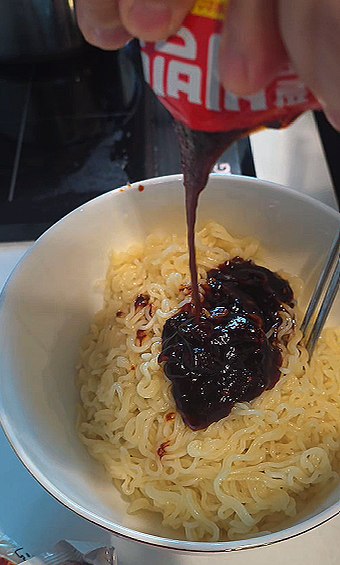 Sauce goes on at the very end. No soup, no broth — just the noodles and that sweet-spicy sauce.
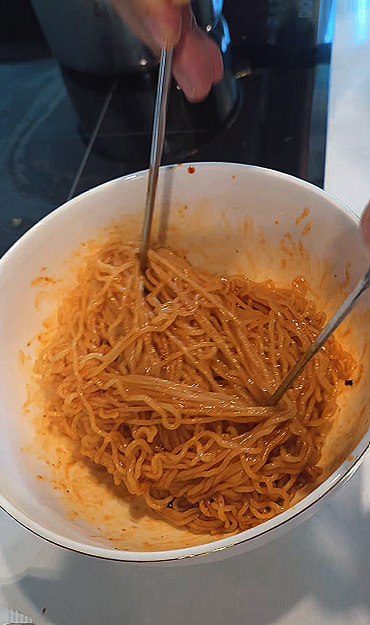 Mixed by digging at the center, not stirring. Glossy, evenly coated, ready to eat.
Step 6: Top it (optional but worth it)
Plain bibimmyeon is great, but toppings take it up a level. The classic choices: a boiled or fried egg, thin-sliced cucumber for crunch and freshness, or a few sheets of gim (roasted seaweed). Any one of them works — pick what you have.
A few tips, all in one place
- Rinse, rinse, rinse. The starch is the enemy of a clean, refreshing bowl.
- Ice water = better texture. A quick chill makes the noodles tighter and chewier.
- Drain hard. Watery noodles dilute the sauce and taste bland.
- Dig, don’t stir. Lifting from the center mixes it more evenly with less effort.
- Cook two if you’re hungry. Even RM said one was too small.
FAQ
Is Paldo Bibimmyeon a hot or cold dish? Cold. You boil only the noodles, then rinse and chill them. The sweet-spicy sauce is mixed in cold — no broth.
Why do I rinse the noodles? To wash off the surface starch. Without rinsing, the noodles turn gluey and the dish loses its clean, refreshing character.
Why does everyone cook two packs? One pack is small. BTS’s RM famously said one was too small and two too much, and asked for a 1.5x size — Paldo responded with a 1.2x bigger version.
What toppings go on bibimmyeon? Most commonly a boiled or fried egg, cucumber, or gim (roasted seaweed). All optional, all good.
More Korean noodles
If you like this, work through the rest of Korea’s noodle world: how Koreans cook Shin Ramyun, jjapaguri (ram-don) from Parasite, and how Koreans eat buldak (fire noodles) without crying.
The photos here are from my own kitchen. The BTS detail is based on RM’s V Live comments and Paldo’s public response, as reported in the Korean press. Bibimmyeon is personal — adjust the sauce, chill, and toppings to your taste.